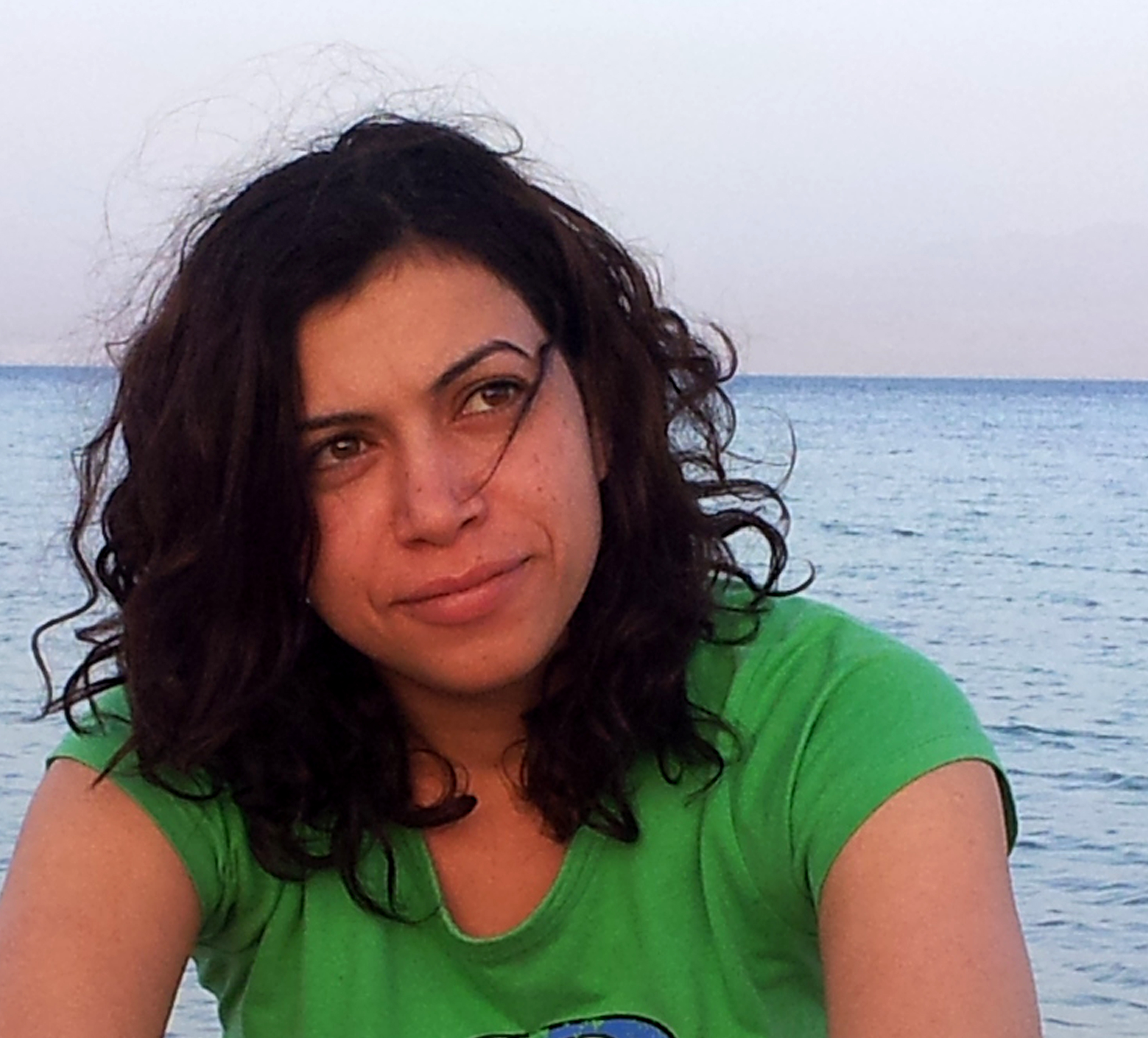
Photo of vendors (Photo: Magharebia via GlobalUrbanist.

Deen Sharp recently wrote an article for The International Urbanist on the role of small cities in political changes. While the focus of Cairo form Below is typically within metropolitan Cairo, his post reminds us of the larger context of which Cairo is a part. I include a quote of his article below and a link to the full piece. You can follow Deen Sharp on twitter @deensharp
In Egypt, protests and organised labour strikes by urban social movements in smaller cities across the country critical to the Egyptian uprising were occurring before Bouazizi’s self-immolation and before the gathering in Cairo’s Tahrir Square on the 25th of January 2011. Indeed, Alexandria rather than Cairo was the site of two of the most critical events that spurred the move to Tahrir Square: the police killing in June 2010 of Khaled Said and the bombing of the Saints Church in January 2011.
The gatherings in public squares across Egypt on the 25th of January did not start from Tahrir Square; they began in Suez before spreading across the country. Police and protesters clashed in this heavily militarised port town resulting in the deaths of the first anti-regime protestorrs — murdered by police firing live ammunition at protestors — and the destruction of the first police station.
Reed the full text of his article Small Cities Arab Uprisings on Global Urbanist
Sawsan Gad is a GIS Data Analyst at The World Bank’s Global Facility for Disaster Reduction and Recovery. She uses GIS and open data to help cities recover after disasters and establish resilience in face of future ones. She is also a co-founder of the mapping initiative, HarassMap, where she analyzes crowsdsourced data on sexual harassment in Egypt to promote safe public space. Before her current job, she worked in Egypt with grassroot NGOs as well as the Egyptian government on a variety of issues related to gender, good governance, and freedom of information policy. Sawsan earned her M.A. degree in Demographic and Social Analysis from the University of California, Irvine, and a Bachelor of Commerce from Ain Shams University.
 Mazin Abdul Karim Mazin Abdul Karim is an architect, educator and designer based in Cairo, Egypt. Mazin received a masters degree in Architecture & Urban Design from DIA/Bauhaus , Germany in 2008. He has taught design studios at the AAST, and Faculty of Urban Design & Town Planning in Cairo since 2005. He has been a visiting critic and has lectured about his work at the AA in London, ETH in Switzerland, and others.
In 2006, he co-founded the design and research practice, CONTRAST Designs, in Cairo. Besides producing contemporary architecture and urbanism, the studio also focuses on cultural analysis, critical investigations and the production of ideas. In 2011 he also co-founded Zawia with 4 other designers/team members. Zawia is a periodical publication on design, architecture and urbanism, coming out from Cairo, Egypt. The publication aims to provide an open platform for the collective knowledge of architectural discourse, and to open new channels for a mutual constructive dialogue between the local and the global community.
 Kareem Ibrahim graduated from Cairo University’s Architectural Department in 1995. In 1997, he worked on the UNDP’s Historic Cairo Rehabilitation Project. He has also worked for Aga Khan Cultural Services – Egypt between 1997 and 2010 as the Built Environment Coordinator of the Darb al-Ahmar Revitalization Project, one of Cairo’s most ambitious urban revitalization programs. In 2009, he co-founded Takween Integrated Community Development and has been working on a range of issues including sustainable architecture, participatory planning, affordable housing, public infrastructure, and urban revitalization throughout Egypt with a number of local and international organizations.

May al-Ibrashy is founder and chair of the Built Environment Collective, an Egyptian NGO that operates via its space MEGAWRA, a hub and workspace that organizes a regular program of public talks and events in addition to research and community outreach projects in architecture and urbanism. She holds a PhD in Archaeology from the School of Oriental and African Studies, the University of London, and is currently adjunct lecturer of architecture at the American University in Cairo. She is also a conservation architect with 20 years experience in architectural conservation and documentation mostly in Islamic Cairo, that last of which was the Cairo Cemetery Salvage Project which she co-directed. She has co-organized training courses in heritage management and interdisciplinary workshops on urban issues, in addition to research projects, the latest being a Getty-UCLA collaborative research project on the historic cemetery of Cairo.

Mohamed Elshahed is a doctoral candidate in the Middle East and Islamic Studies Department at New York University. He lives in Cairo, where he is conducting dissertation research on architecture and urban planning in Egypt from 1939 to 1965, with an emphasis on the Nasser era. His dissertation examines popular discourse on the architectural transformation from anticolonial nationalism to postcolonial developmentalism in Egypt. Mr. Elshahed has a Bachelor of Architecture from the New Jersey Institute of Technology and a Master in Architecture Studies from Massachusetts Institute of Technology. Related to the topic of this article, Mohamed wrote a short piece on unrealized proposals for Tahrir Square (found here) and another one on the transformation of Tahrir during the early days of the Egyptian uprising (found here). He currently blogs at CairObserver.
 Diane Singerman is an Associate Professor and comparativist whose research interests focus on political change from below, particularly in the Middle East, and more specifically Egypt. Her work examines the formal and informal side of politics, gender, social movements, globalization, public space, protest, and urban politics. Her most recent edited books are Cairo Contested: Governance, Urban Space, and Global Modernity, and with Co-Editor Paul Amar, Cairo Cosmopolitan: Politics, Culture, and Urban Space in the New Globalized Middle East. Professor Singerman is also the Co-Director and Co-Founder of Middle East Studies at American University.
Marc Rauch serves as American University in Cairo’s Sustainability Coordinator, in the newly created Office of Sustainability where he spearheaded the creation of a groundbreaking university-wide carbon study. Through Our Carbon Footprint, American University in Cairo became the first institution of higher education in the Middle East and North Africa to conduct a comprehensive study of its own impact on climate change. The report, prepared by the Desert Development Center (DDC) and the Office of Sustainability, is the result of campus-wide efforts incorporating the work of faculty, students and staff of AUC. It identifies many strategies for reducing the University’s carbon footprint and energy expenditures.

Sarra Moneir
Cairo from Below would like to welcome Sarra Moneir, our new Senior Fellow, who will be contributing articles and leading a project, all with a focus on the understanding of public and private spaces in Egypt.
Sarra Moneir is currently an Assistant lecturer of political science at the Faculty of Economics and Political Science – Future University in Egypt. She is a holder of a B.Sc. Political Science from Cairo University in 2006 and an MA degree of Global Political History from the University of Vienna in 2010. Currently Moneir is a PhD candidate at the Institute of International Development Studies at the University of Vienna, while carrying out her field research in Cairo. Moneir specializes in masses’ political psychology, masses-political institution relationships and grassroots movements and political urban development studies.
We greatly look forward to Sarra’s writing and future project.
“القاهره من الاساس” ترحب بالزميله ساره منير
القاهره من الاساس “ترحب بالزميله الجديده ساره منير التى ستشارك بمقالات و قياده مشروع مع التركيزعلى فهم الفراغات العامه والخاصه بمصر
ساره حاليا مدرس مساعد فى العلوم السياسه بكليه الاقتصاد والعلوم السيايه بجامعه المستقبل بمصر,وهى حاصله على درجه الماجستير فى فى العلوم السياسيه من جامعه القاهره عام 2006 ودرجه الماجستير فى التاريخ السيايى العالمى من جامعه فيينا عام 2010,حاليا هى مرشحه لدرجه الدكتوراه فى معهد دراسات التنميه الدوليه من جامعه فيينا مع القيام ببحثها الميدانى بالقاهره .ساره متخصصه فى السيكولوجيه السياسه للجماهير,والعلاقات السياسيه بين الجماهير والمؤسسات ,الحركات الشعبيه ودراسات التنميه الحضريه السياسيه.
نحن نتطلع الى كتابات ساره و مشروعها.
——————–
Translated by: Hazem Adel, Ain Shams University, Faculty of Engineering, BSc Architecture 2011
Cairo from Below announces the launch of the Our Urban Futures Ideas Competition. We are now accepting ideas posted on the Cairo from Below Facebook Page. Information about this competition and how to submit are below (in English and Arabic), as well as on the Cairo from Below Facebook page. We are excited to see the amazing ideas you come up with, and make sure to tell your friends about the competition because a large part of the judging comes from “likes” and comments on your ideas!
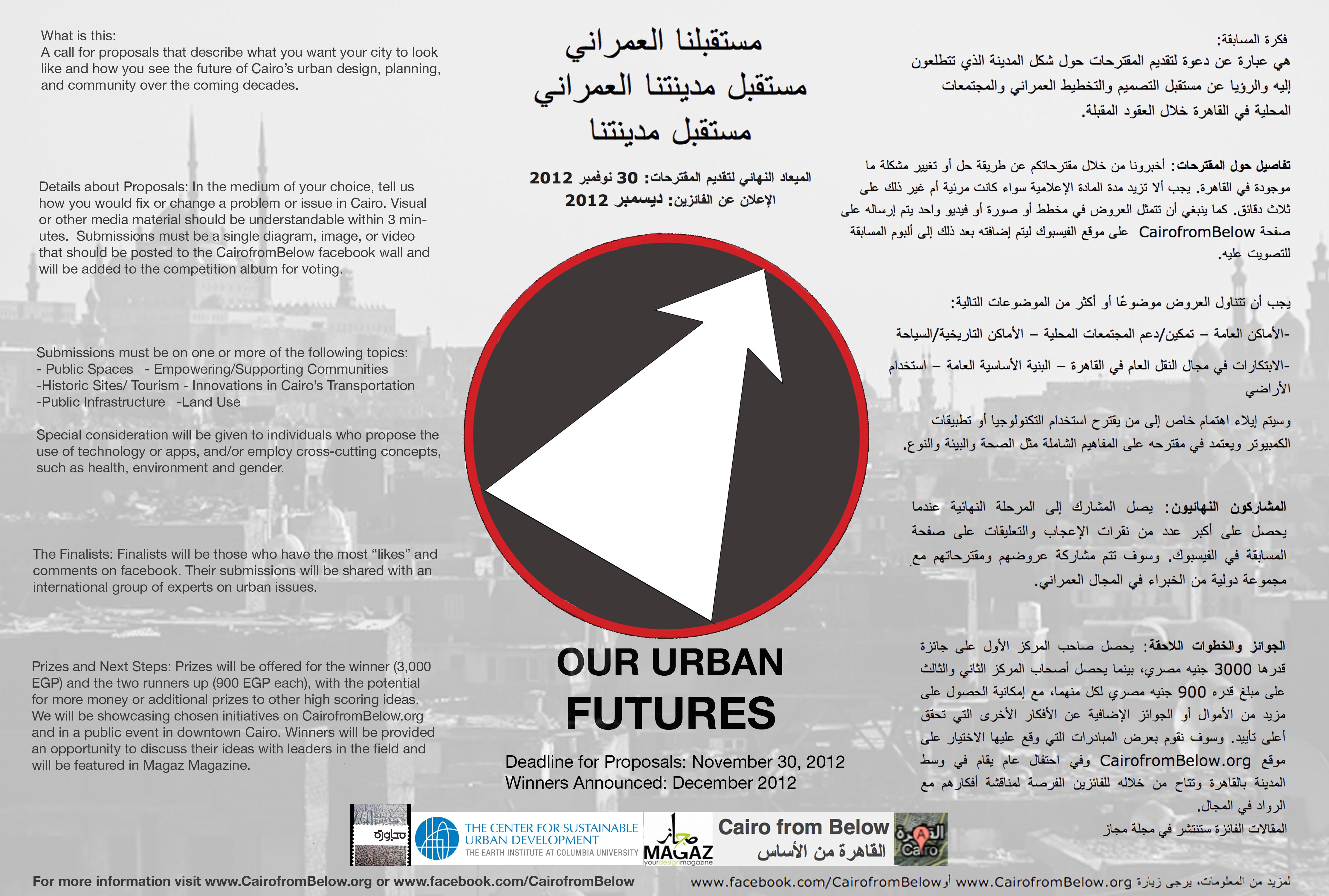

Note: rules in English below
<القاهرة من الأساس>
(Cairo from Below)
تقدم
مستقبلنا العمرانى
مبادرة دولية بخصوص مستقبل القاهرة
ما هى رؤيتك بخصوص مستقبل القاهرة؟
ما هو دورك فى رسم مستقبل مدينتك؟
ماذا تحب أن ترى فى الحى أو المنطقة التى تعيش بها؟
ماذا تحب أن ترى فى مدينتك “القاهرة”؟
كل ما يتعلق بالمدينة… الماء, الطاقة, الإسكان, المواصلات, المخلفات, المشاركة المجتمعية عن طريق
(community-mapping)
احكيلنا عن الوسيلة لتحقيق رؤيتك
احكيلنا ليه الوسيلة دى مهمة
اشرح لنا فين يبدأ التغيير
الأفكار المقترحة ممكن أن تقدم فى أى صورة :
– رسم (كارتون) – فيلم قصير- جرافيكس (أى رسومات أو أفلام يجب أن تكون مصحوبة بشرح توضيحي مكتوب)
هذة مسابقة جزء من مبادرة دولية بخصوص مستقبل القاهرة بدأنا بها من هنا
آخر موعد لإستلام المقترحات: 30 نوفمبر 2012
إعلان النتائج: دسمبر 2012
الجوائز: 500$ جائزة أولى, 150$ جائزتين تقديريتين
سوف يدعى المشاركين لحفل إعلان النتائج حيث سيعرضون مقترحاتهم
و هذة المبادرة ستتضمن الكثير من الأعمال و الأنشطة التى ستأتي لاحقاwww.CairofromBelow.org
1.
المطلوب: مطلوب مقترح يشرح تخيلك لشكل القاهرة فى المستقبل. ماذا تريد أن ترى فى مدينتك؟ و كيف ترى مستقبل التخطيط, التصميم العمرانى, و المجتمع فى العقود المقبلة؟
.2
أهمية المسابقة: على مدار عشرات السنين كان نظام إدارة المدينة و بالأخّص “الأراضى” يصب فى مصلحة فئة أو شريحة محدودة من المجتمع على حساب مصلحة القاعدة العريضة من الشعب فكانت سوء إدارة الأراضى و التخطيط العمرانى و الإسكان كلها مشاكل تؤثر سلباً على سكان المدينة. و لكن بدخول مصر فى عصر جديد يجب أن يواكبه تحول فى طريقة معالجة هذة المشاكل و إعادة النظر و تنمية وسائل و سبل جديدة لتحسين و تطوير المدينة. و لا يجب ان تقتصر مشاركة المصريين فى تشكيلمم مدينتهم مستقبلها فقط عبر صناديق التصويت و لكن يجب أن تكون مشاركتهم فعّالة و تتناول أدق التفاصيل التى تمس حياتهم اليومية مثل إستخدامات الأراضى, الفراغات, الإسكان, الإدارة المحلية, الخدمات….إلخ. و الهدف من هذة المسابقة هو تركيز الضؤ على هذة الموضوعات الغير متناولة أو تركيز الضوء على شرائح من المجتمع غير ممثلة فى تلك الحوارات و المساعدة على إشراك هذة الأصوات الجديدة على مائدة الحوار. و نرى أنه من الممكن أن يتم ذلك من خلال نشر هذة الأفكار الجديدة الجيدة للوصول إلى نمط جديد لمدينة القاهرة فتكون المدينة التى تعبر عن كافة سكانها و تتفاعل معهم
3.
القائمون على المسابقة: “CairofromBelow” تضم مجموعة من الأفراد المهتمين بمشاكل القاهرة و موقعنا الالكترونى CairofromBelow.org هو أحد الأدوات المستخدمة للتعريف بنا و تقديم الإستشارات و إفساح الطريق أمام مشاركة مجتمعية لرسم رؤية جديدة لمدينة القاهرة رداً على مخطط”القاهرة 2050″ الذى وضعته وزارة الإسكان. مجموعتنا تضم باحثين اكادميين و طلالب جامعيين و متخصصين فى العمران و التخطيط و نشطاء من مصر و الولايات المتحدة الامريكية ومن دول أخرى.
.4
تفاصيل المسابقة: تحب مدينتك يكون شكلها إيه؟ (عبِّر عن رؤيتك لمدينتك)
عبر عن نفسك بأى طريقة من الطرق التالية: رسم (كارتون) – فيلم قصير- جرافيكس (أى رسومات أو أفلام يجب أن تكون مصحوبة بشرح توضيحي مكتوب).
احكيلنا عن احد المشاكل أو المسائل اللى تهمك فى القاهرة و اقترح لنا وسائل لحلها أو تغيير الوضع للأفضل. محتوى القطع الفنية من رسم (كارتون) أو فيلم أو جرافيكس لا يتعدى دقائق لشرح الفكرة. المقترحات يجب أن ترسل علي صفحة (القاهرة من الأساس) علي الفيسبوك
الفكرة ممكن تشتمل على:
الفراغ العام:
ما هى حالة الفراغات العامة في مصر حالياً؟ما مدي إحساس المواطنين بملكية الفراغات العامة؟وما إنعكاس هذا على حرية الناس فى إستغلال هذه الفراغات؟أين توجد هذه الفراغات داخل القاهرة؟ ما رؤيتك لمستقبل الفراغ العام في مصر؟
تمكين و دعم المجتمعات:
المجتمعات المترابطة فى القاهرة: ما هو السبيل لتمكينها من قدراتها؟ كيف يمكن التعلم من تجاربهم والإستفادة منها؟ ما دور المحليات فى تنمية هذه المجتمعات؟ و ما علاقة هذا بالحق فى
السكن؟
المواقع التاريخية/ السياحة:
ما هى الحدود التى تفصل بين الحفاظ علي الأثر و ما بين إعتباره حياً يستخدمه الناس؟ ما هو أثر ذلك على يسمي السياحة فى المدينة؟
المواصلات و الإنتقال داخل المدينة:
ما هى الحلول المبتكرة لتحسين مستوي شبكة المواصلات داخل القاهرة؟ ما دور المواطنين فى هذه العملية؟ كيف يمكن أن يؤثر هذا علي أحوال السكان و البيئة؟
البنية التحتية:
ما هي حالة البنية التحتية القائمة حاليا فى القاهرة؟ وما مستوي أدائها؟ كيف يمكن تحسينها؟ ما أكثر ما يعني السكان فيما يخص البنية التحتية؟
إستخدامات الأراضي:
من المسئول عن تحديد إستخدامات الأراضي في القاهرة؟ من وجهة نظرك هل يمكن تحديد إستخدامات الأراضي بطريقة أفضل؟ كيف يمكن لتحديد إستخدامات الأراضي دور في إعادة توزيع
موارد المدينة. سوف ينظر بإهتمام خاص للإقتراحات التى تطرح أفكاراً شاملة في أحد المواضيع المذكورة أعلاه تتلاقي فيها مواضيع مثل: التطبيقات, التقنيات, الصحة العامة, الحق في المدينة و حقوق المرأة.
5.
لجنة التحكيم: سيقوم بإختيار الفائزين لجنة دولية تتكون من مجموعة من الخبراء و المهتمين بشئون العمران. سوف يتم إختيارالإقتراحات الفائزة حسب مدي النقاش التي تثيره على الفيسبوك. مما يعني أن المقترح الذى سيحصل على أكثر عدد من(likes) سوف يكون مؤهل أكثر للفوز.كما سيقوم كل عضو في لجنة التحكيم بترشيح إقتراح من الإقتراحات المقدمة ليكون ضمن أعلى عشرة حتي و إن لم يكن حصل على عدد على رقم عالي من التعليقات إن رأى أنه يستحق ذلك.
6.
الجوائز وماذا بعد؟
الجوائز: 500$ جائزة أولى, 150$ جائزتين تقديريتين
سيتم عرض الأفكار الفائزة في مناسبة عامة في القاهرة.
CairofromBelow.org سوف نقوم بعرض المبادرات التي تم اختيارهاعلى
وسيتم توفير الفائزين فرصة لمناقشة أفكارهم مع قادة في هذه مجال
مسابقة مستقبلنا العمرانى هي عملية إثارة النقاش.< القاهرة من أسفل> ليست قادرة على تمويل المشروع الفائز ، فقط تحمل لهم سوى قيمة الجائزة
__________________________________________________________________________________________
Cairo from Below Presents
Our Urban Futures Ideas Competition
Make your voice heard to influence the future of Cairo
What is your vision for the future of Cairo?
What is your role in the future of your city?
What do you want to see in your neighborhood?
What do you want to see in your Cairo?
Tell us your vision.
Tell us how to make it a reality.
Tell us why it matters.
Show us where the change begins.
Competition proposals should be in a visual format, like a short video, cartoon or info-graphic with narratives embedded.
Deadline for Proposals: November 30th, 2012
Winners Announced: December 2012
Awards: $500 first prize, $150 for two runners up
Participants will be invited to attend an event in Cairo where they will present their ideas
Many entries will be showcased on CairofromBelow.org and an event to be held in downtown Cairo. Cairo from Below aims to foster partnerships with the winner(s) to promote the further-development of their ideas
1) What is this: A call for proposals that describe what you want your city to look like and how you see the future of Cairo’s urban design, planning, and community over the coming decades.
2) Why this is Important: The structure of governance over land in Cairo has, for decades, benefited a narrow elite at the expense of the wider population. Land mismanagement and urban planning and governance issues affect daily life and fail to promote economic activities in the city. As Egypt’s political, social, and economic climate evolves, it is entering a period of opportunity to examine and develop new ways of improving the city.
Egyptians’ participation in the shaping of their city should not begin and end with casting a vote. Egyptian ideas and opinions about the more granular issues, including the use of physical spaces, housing and land management, city governance, services, should be central to the debate. The aim of this competition is to highlight underrepresented issues, individuals and groups. This will encourage the input of new voices by publicizing great ideas. The goal of this competition is to continue to promote activities that will further Cairo as an politically, economically and environmentally sustainable city.
3) Who we are: Cairo from Below is a network of individuals interested in policy, urban planning, and responsible, inclusive democratic governance. CairofromBelow.org is one of our tools and was initially formed in response to the Egyptian Housing Ministry’s Vision Cairo 2050 document. In an effort to foster increased citizen and community consultation and participation in the planning process, a group comprised of students, professionals, academics, and activists in Egypt, the US, and around the world, founded this online space to debate and cultivate ideas and potential solutions for highlighted urban issues in Cairo.
4) Details about Proposals: In the medium of your choice, tell us about a problem or issue in Cairo and how you would fix or change it. Visual or other media material should be understandable within 3 minutes. Submissions must be a single diagram or image or video that should be posted to the CairofromBelow facebook wall and will be added to the competition album for voting.
Submissions must be on one or more of the following topics:
Public Spaces: How should public spaces be used? What do the people want? What is the state of public spaces in Cairo today and where do you want to see it? What do you envision for the future of public spaces in Cairo?
Empowering/Supporting Communities: Strong communities and networks exist in Cairo; what are some ideas for supporting these networks and empowering them to be community activists while pushing for their input and voices to be heard? What are some ways they have worked? How does local governance play a role? How does this link to security of tenure and housing rights?
Historic Sites/ Tourism: Where is the balance to be struck between preserving historic sites and encouraging responsible tourism to the city?
Innovations in Cairo’s Transportation: What are some innovative ideas for improving Cairo’s transportation network? How can people be involved in the process? How will it best support the population and promote the environment?
Public Infrastructure: How is public infrastructure designed? Used? Abused? Where do you see the future of this? What do the people want from their government in respect to infrastructure?
Land Use: Who is responsible for determining the use of land in Cairo and, in your eyes, who should possess this role? How is land used and what process might be taken to reach a more equitable distribution?
Special consideration will be given to individuals who are proposing cross-cutting concepts within one of the chosen topics, such as apps, technology, rights to the city, health, environment and gender.
5) The Judges: The judges are an international group of experts on urban issues who will be helping to choose the finalists. Finalists will be those who are the most popular on Facebook. This means, your ability to garner increased “likes” and discussion on Facebook will add to your total score and will put your idea among the top few the judges will consider. Each judge will be allowed to pull one idea not in the top 10 into the top 10, should they feel that it belongs there, but had not scored as highly based on the number of comments and “likes”.
6) Prizes and What Comes Next
- Prizes Offered will be offered for the winner ($500) and the two runners up ($150 each), with the potential for more money or additional prizes to other high scoring ideas
- We will be showcasing chosen initiatives on CairofromBelow.org
- Winning ideas will be exhibited in a public event in downtown Cairo.
- Winners will be provided an opportunity to discuss their ideas with leaders in the field.
Please note: the Our Urban Futures Ideas Competition is a process to generate debate. Cairo from Below is not able to fund the wining project, only afford them the prize money etc.
 Neither the impacts of climate change on people, nor the ways in which people respond to climate change are gender-neutral. Women usually bear the burden of climate changes because they are the bulk of the Egypt’s poor and have fewer resources for coping with global warming and the ensuing related disasters already occurring with more frequency and intensity. The mortality rates for women in Egypt continue to be higher than men, and climate change will worsen mortality expectancies for women, who are more likely to die in natural disasters and, indirectly because it is women and girls who sacrifice food to eat when it is scarce. Gender inequalities and different gender roles, needs and preferences that vary over space and over time, influence the different ways in which young, adult, and elderly males and females experience the impacts of climate change and develop strategies to adapt to or mitigate them.
Gender equality is both a development goal in itself – reflected, for example, in the third Millennium Development Goal on gender equality and women’s empowerment, the Beijing Platform for Action and the Convention on the Elimination of All Forms of Discrimination Against Women (CEDAW) — and a condition for the achievement of sustainable development. As such, gender equality is also a condition for successful adaptation to climate change, and the successful transition to low-carbon pathways in Egypt, because the women livelihoods are more directly threatened, as they make up the majority of the small farmers. Their ability to migrate in search of economic opportunities makes it easier for men to deal with crisis, and may result in benefits for the family as a whole. However, male migration to Cairo the city capital of Egypt often increases women’s workload, as they are left behind to manage the household in addition to usual tasks.
Climate change can also increase women’s exposure to other risks, such as gender-based violence and HIV infection. In addition to the challenges described above, climate change has implications for food preparation and storage (in terms of water for food preparation and the vulnerability of food stores to extreme events, such as cyclones and floods). Harvests may be reduced or even wiped out by floods or droughts. This affects market prices and the availability of surplus to sell, placing pressure on both men and women to identify other sources of income and reduce major expenditures (e.g. school fees). In times of food shortage, women are often expected to feed other members of the family before attending to their own needs.
The implementation of several elements of any environmental plan will strongly depend on the input of women. This will, in particular, be the case for a successful implementation of measures in the National Water Resources Plan of Egypt category of ‘Protecting health and environment’ but also for some measures in the other categories in the same plan. The governments of Arab Spring countries should adopt the following policy principles with respect to gender issues in water management:
• Equal opportunities for men and women with regard to:
− involvement in discussion and decision making on water use and resources issues;
− dissemination of information and communication about water resources and water use issues and financial consequences provided by institutions concerned;
− Active participation in decision-making bodies dealing with water resources and irrigation management
• Equal benefits for men and women deriving from effective and efficient water resources management., which means promoting the involvement of women as well as men in consultation and decision-making from the community level to the highest level of organizational management. This will require further efforts to be made in creating space for women in planning and implementation processes, as well as to facilitate their participation through capacity building.
Gendered water resources management will lead to greater:
• Effectiveness: the infrastructure, as well as valuable water resources, will be more widely and optimally used and sustained by all user groups;
• Efficiency: the presence of limited water resources the sector agency can reach more individuals;
•Development: the service and its social process will not only bring water, it will increase consumption, production, income environmental security, health and overall family welfare;
• Sustainable use in freshwater ecosystem: women’s and men’s direct and fair participation in research and project implementation can increase the potential flexibility and creativity in responding to environmental insecurity and changes in resource system;
• Equity: burdens and benefits will be shared more equitably between women and men in the community at large, as well as in the household.
The importance of involving women as well as men in water resources management is not only to improve women’s situation, but also essential element for effective development, is the utilization and management of water resources. There is an increasing urgency in the need to mainstream a gender perspective at the overall water resources level because of the new emerging international perspectives on water resources.
The ugly truth we face is that most gender issues being tackled are merely used as “page filling” in a report without real application in real life. This is likely due to the personal note that such strategies for gender equality related to climate change reports in Egypt that lack effective strategies for systematic integration of gender in their adaptation and mitigation work. Especially with regard to projects funded by donors’ agencies outside the MENA region, experiences of integrating gender in their work on climate change, some level of awareness, policy commitments and efforts or plans to scale up successful pilot projects exist. Much work remains for gender to become truly and systematically incorporated into their climate change policies and programs.
Donors’ agencies, such as USAID, do not generally lack gender or climate change capacities, but may lack the capacity, resources and clear mandates to connect them. Both climate change and gender capacities usually exist within each donor organization, backed in some cases by strong gender policies, but gender integration, particularly in climate change portfolios, is often weak. This is in part due to technical barriers and poor communication between climate change and gender experts. A lack of clear mandates and concepts in mainstreaming processes leads to ‘mainstreaming fatigue’, a lack of adequate human and financial resource allocation for gender mainstreaming, and a lack of strategies to identify gender entry points across climate change policy work and program cycles.
Ayman Ramadan Mohamed Ayad is an engineer and Water Resources Advisor at National Water Resources Plan (NWRP-CP), and has been involved in the future vision for Alexandria integrated water urban development. He also teaches applied hydraulic at Alexandria Universities, and serves as the Egyptian Coordinator for NAYD (Network of African Youth for Development).
Through the lens of land – new politics and policies in Egypt’s recent races
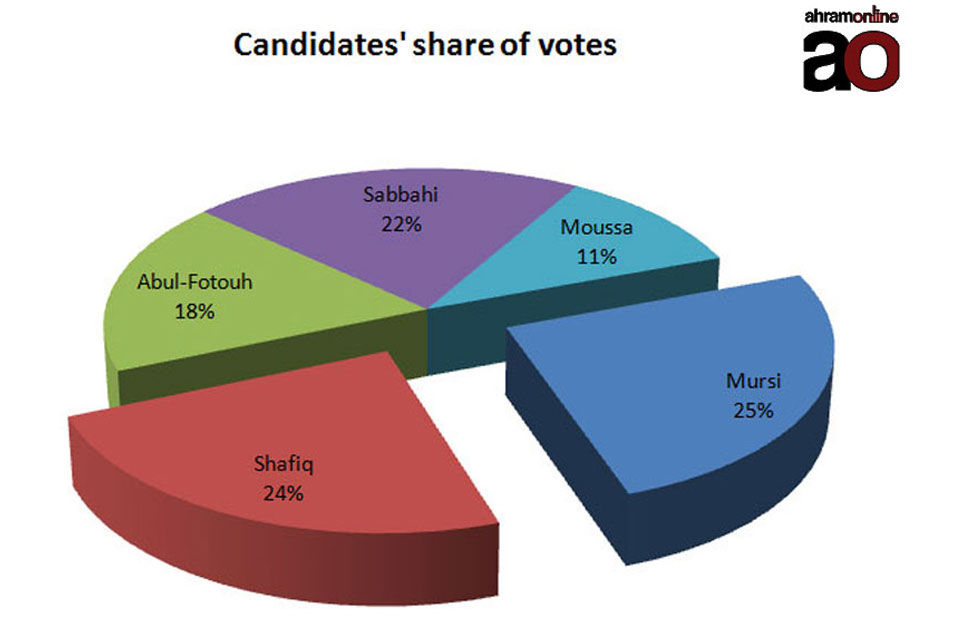
Candidates’ Share of Votes
Amidst the emotional and political bustle of elections in Egypt, we wanted to take a moment to review the key figures and parties emerging over the last several months through the lens of land rights and housing policy. While these more localized issues are not at the forefront of national discussion. Many platforms touch on housing and land in their larger vision for the country.
Land rights and housing policy remain integral to this period of transition in the country. Just days ago, dispossessed Egyptian farmers were vying for President Elect Mohammed Morsi’s attention to settle disputes with Youssef Wali, Minister of Agricuture under Mubarak who used to give huge tracts of lands to judges, generals and ministers. Among many other issues, it will be most interesting to see how Morsi handles these sensitive and deep-rooted issues. For a complete summary of events leading up to and through the recent transition check out the Huffington Posts’ timeline.
Below we’ve highlighted the specific platform items of each party that mention issues of land, housing, basic services, environment and local governance.
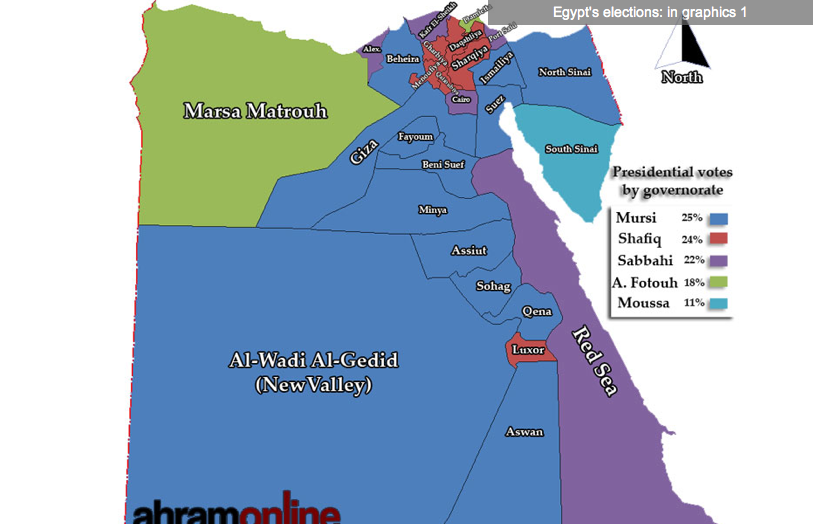
Presidential Vote by Governorate
(Blue – Morsi/ Red – Shafiq/ Green – Fotouh)
They are categorized into two groups: parties that focus on the governance of land and those who support improved housing policy.
For a full summary of all political alliances and parties, visit the Carnegie Endowment’s Guide to Egypt’s Transition and Jadaliyya. A great deal of the information below was found in M. Cherif Bassiouni’s Chronicles of the Egyptian Revolution Report.
LAND OWNERSHIP AND MANAGEMENT
Al Masriyeen al Ahrrar (The Free Egyptians Party):
– Codify land ownership for the people of Sinai
– Provide land for low-income housing accommodations to provide an alternative to the propagation of unplanned slums
– Encourage scientific investigation of air pollution and create plans for proper waste management
– Criminalize infringement on agricultural land, especially infringement for the purpose of urban expansion
– Decentralize state management and ensure an equitable distribution of resources among the governorates
– Provide credit and production inputs at reasonable prices to farmers
Hizb Al Ishtaraki Al Masri (Egyptian Socialist Party)
– Set a maximum limit on land ownership, issue deeds of ownership to farmers and stop encroachment on arable land
– Preserve the environment and conserve natural resources
– Provide agricultural inputs at subsidized prices and promoting cooperative marketing of crops
– Transform the economic structure from one based on services promoting speculation and rent to one promoting agriculture and industry
– Set a maximum limit on land ownership, issue deeds of ownership to farmers and stop encroachment on arable land
– Rent and interest rate ceilings for agricultural land and loans
– Preserve the environment and conserve natural resources
– Set a maximum limit on land ownership, issue deeds of ownership to farmers and stop encroachment on arable land
– Rent and interest rate ceilings for agricultural land and loans
– Transform the economic structure from one based on services promoting speculation and rent to one promoting agriculture and industry
– Provide agricultural inputs at subsidized prices and promoting cooperative marketing of crops
– Equal distribution of development amongst the governorates, especially rural areas
Socialist Popular Alliance party
– Demanding the reclamation of all lands sold to private investors during the regime of Mubarak.
– Withdrawal from the agreement on the liberalization of international trade due to its ‘unfair conditions’
– Advocating for a new housing law that would create a more equal relationship between landlord and tenant and developing a housing policy based on support for public housing, youth, and the poor
– Supporting the cancellation of all concessions granted to foreign countries in Egypt’s waterways, land, and air if these are used to harm any of the peoples of the world
HOUSING POLICY
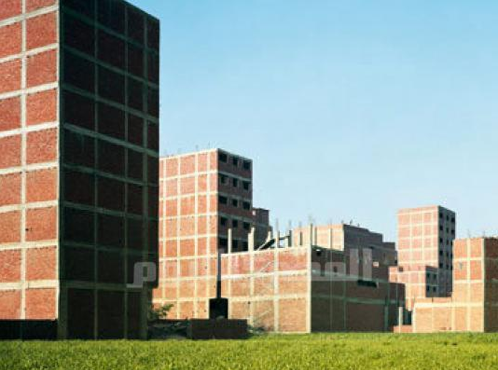
Cairo Photographed by John Harris Al Masri al Youm
Al-Gabha al-Dimuqrati (The Democratic Front Party)
– Expand housing projects beyond the Nile River Valley and protect agricultural land
Democratic Generation Party
– Provide state-subsidized housing to those in need.
Al Tahrir al Masry (Egyptian Liberation Party)
– Support the right to health care, education, employment and housing
Al Tagammu (National Progressive Unionist Party)
– Allow trade unions and NGOs to operate freely without government oversight or intervention
– Ensure that the government provides adequate public services
– Regulate water consumption and invest in the development of sustainable energy sources
Al-Wasat (The Center Party)
– Environmental protection cannot be achieved by the market, which does not consider environmental gain and loss; only state enterprises can take into consideration the environmental
– The state should invest in infrastructure and public works projects and provide incentives for private investment
– Egypt should be self-sufficient in key foods such as wheat
– Encourage communities to fight poverty through local development projects and zakat (alms) institutions
Hizb Al Amal Al Islamiya (The Islamic Labor Party)
– Revitalize plans for the development of the Sinai Peninsula and relocate millions of Egyptians to live there to strengthen the area and prevent Zionist threats
– Establishment of an independent zakat (alms) institution charged with administering charitable contributions to the poor
Al-Tayar al-Masry (Egyptian Current Party)
– Enhancing public services offered to citizens.
– Every individual has a right to equal access of education, healthcare and housing.
– Eradication of poverty through job creation and unemployment benefits.
– Provide adequate housing and universal health insurance for all Egyptians
Al Masry al Dimuqrati al Igtima’i (The Egyptian Social Democratic Party)
– Maintain a clean environment by preserving natural resources in a sustainable way for future generations
– Advocate minimum guaranteed income
– Ensure adequate healthcare and housing
– Ensure economic development through public infrastructure spending which will stimulate the economy
– Protection of the environment and natural resources
Al Hurriyya wa al ‘Adala (Freedom and Justice Party – Democratic Alliance) *Party of new President Morsi
– Secure citizens’ basic needs and services including food, clothing, housing, health care, education, transportation, security and entertainment
– Support environmental conservation and sustainability and reducing pollution and the depletion of resources
– Secure the sources of the Nile River
– Relocate polluting factories to areas far from populated areas and provide financial incentives for clean industries
Al Hizb Al Sheo’ei Al Masry (The Egyptian Communist Party)
– Equal opportunities in health, education, housing and employment for all citizens
BOTH
Al-Ghad Party (Tomorrow Party)
-Pursue environmentally sustainable solutions to the water scarcity crisis.
– Support competitive bidding for government contracts
– Provide a minimum wage and the expansion of micro-credit programs
– Codify land ownership for the people of Sinai
– Encourage the development of wind, solar and biofuels energy
– Maximize water conservation by improving ties with Nile basin countries, improving processes for desalinating sea water, and invest in facilities for recycling wastewater
– Provide land for low-income housing accommodations to provide an alternative to the propagation of unplanned slums
– Encourage scientific investigation of air pollution and create plans for proper waste management
– Criminalize infringement on agricultural land, especially infringement for the purpose of urban expansion
– Provide credit and production inputs at reasonable prices to farmers
– Decentralize state management and ensure an equitable distribution of resources among the governorates
Al-Adl Party (Justice Party)
– Exploit all of Egypt’s land from the western desert to the Sinai for economic development but without harming the environment
– Rely on new and renewable energy sources
– Invest in renewable energy
– Self-sufficiency in water and energy
– Adequate housing, healthcare and education is the right of every citizen, including children, workers, the handicapped and the elderly
– Provide low cost housing to those who cannot otherwise afford it
– Encourage environmental and energy conservation in construction
– Expand settlements beyond the narrow Nile valley
– Create green spaces within cities
– Reduce construction in agricultural areas
– Reduce the spread of slums
THE WAY FORWARD
Cairo 2011 – Photo credit: Muneeb Ansari
As with other areas of potential change in Egypt’s political landscape, there are both promising and worrying signs in land rights and housing policy.
For example, independent Presidential candidate, lawyer and labor activist Khaled Ali campaigned strongly on these issue and is an example of one of several people and organizations fighting for land rights and better housing policies. His campaign called for cooperatives to increase Egypt’s agricultural lands, to reclaim desert lands, and to realize self-sufficiency in agricultural production. While he received a fraction of the vote, his commitment to his platform continues.
However, all this may be the exception rather than the norm. Other Presidential candidates, like Ahmad Sahafiq, frequently dealt in discounted land sales. Employees at the Civil Aviation Ministry and EgyptAir Holding Company have filed more than 40 lawsuits against Shafiq since the uprising, accusing him of corruption and squandering public funds. However, the fate of these cases remains unknown, especially since the public prosecutor transferred them to the military prosecution in May, and Shafiq was never summoned for interrogation.
They also accuse Shafiq of squandering funds by investing more than LE100 million in building two malls next to the Cairo and Sharm el-Sheikh airports, projects that failed to generate any revenue. Selling vast tracts of ministry land to some businessmen at cheap prices is also among the accusations.
In the coming months, the presence of concrete issues relating to land and housing policy in national political dialogue will be telling of the new administration’s true commitment to transforming the daily lives of Egyptians. While discussion remains focused on foreign policy, national democracy, and the relationship between the government and military, it is important for community organizations and activists to keep pushing for politicians to deliver on commitments to these more micro issues.
—
Dana Kardoush is the Cairo from Below Communications Coordinator. Kardoush is an alumnus of Columbia’s School of International and Public Affairs (SIPA). While at SIPA, along with fellow classmates and colleagues in Cairo, she contributed to forming Cairo from Below. Kardoush’s interest lies in civil society mobilization and community-led development in the Middle East, and as a Palestinian-American, she hopes to return to live and work in Palestine in the future.
Meredith Hutchison is the Cairo from Below Programs Coordinator. Meredith holds a Masters in International Affairs from Columbia University. While at Columbia, she was part of the team that formed Cairo from Below. Meredith’s interests center on local governance and accountability, and she hopes to continue to support the growth of community media hubs worldwide.

Anne Bozack, MPH
Cairo from Below would like to welcome Anne Bozack, MPH, our new Senior Fellow. Anne will be contributing articles and leading a project, all with a focus on urban health issues in Cairo.
Anne is a Project Director in the Center for Evaluation and Applied Research at the New York Academy of Medicine (NYAM). Anne is currently working on several mixed methods studies related to health disparities and prevention of chronic disease in urban populations. Prior to joining NYAM, Anne gained research experience at Columbia University, focusing on homelessness, prisoner reentry, and HIV/AIDS. She has also worked as a Staff Assistant for United States Senator Barbara Boxer. Anne holds a Masters in Public Health in Sociomedical Sciences from Columbia University and BAs in Environmental Science and Architecture from the University of California, Berkeley.
We greatly look forward to Anne’s writing and future project.
“القاهره من الاساس” ترحب بالزميله الجديده “ان بوزاك”
“القاهره من الاساس ” ترحب بالزميله الجديده “ان بوزاك” التى ستساهم بمقالات و تقود مشروع بخصوص الصحه فى المناطق الحضريه بالقاهره
ان مديره مشروع بمركز التقييم والابحاث التطبيقيه باكاديميه نيويورك للطب.”ان” تعمل حاليا على العديد من الابحاث المختلطه الطرق المتعلقه بالفوارق في مجال الصحة والوقاية من الأمراض المزمنة في سكان المناطق الحضرية.قبل انضمامها الى اكادميه نيويورك للطب اكتسبت ان خبره بحثيه فى جامعه كولومبيا متركزه على التشرد، وعودة السجناء، و الإيدز.كما عملت كمساعده لعضوه مجلس الشيوخ الامريكى باربرا بوكسر. آن حاصله على درجة الماجستير في الصحة العامة في العلوم الاجتماعيه-الطبيه (سوجيوميديجكال)من جامعة كولومبيا وبكالوريوس في علوم البيئة والهندسة المعمارية من جامعة كاليفورنيا في بيركلي
ونحن نتطلع الى كتابات ان و مشروعها
————-
Translated by Hazem Adel, Ain Shams University, Faculty of Engineering, BSc Architecture 2011.
Our Urban Futures Ideas Competition to begin JULY 14 2012. See details below:
International Collaboration on the Future of Cairo –
التاريخ: 14 يوليو 2012 – 1 سبتمبر 2012
تقديم جميع المواد ل
cairofrombelow@gmail.com
مع اسمك، وعملك، ملخص البحث ومعلومات الاتصال.
يرجى الإشارة إلى صورة واحدة لاستخدامها في هذا الألبوم الفيسبوك
1- المطلوب: مطلوب مقترح يشرح تخيلك لشكل القاهرة فى المستقبل. ماذا تريد أن ترى فى مدينتك؟ و كيف ترى مستقبل التخطيط, التصميم العمرانى, و المجتمع فى العقود المقبلة؟
2- أهمية المسابقة: على مدار عشرات السنين كان نظام إدارة المدينة و بالأخّص “الأراضى” يصب فى مصلحة فئة أو شريحة محدودة من المجتمع على حساب مصلحة القاعدة العريضة من الشعب فكانت سوء إدارة الأراضى و التخطيط العمرانى و الإسكان كلها مشاكل تؤثر سلباً على سكان المدينة. و لكن بدخول مصر فى عصر جديد يجب أن يواكبه تحول فى طريقة معالجة هذة المشاكل و إعادة النظر و تنمية وسائل و سبل جديدة لتحسين و تطوير المدينة. و لا يجب ان تقتصر مشاركة المصريين فى تشكيل بلدهم و مستقبلها فقط عبر صناديق التصويت و لكن يجب أن تكون مشاركتهم فعّالة و تتناول أدق التفاصيل التى تمس حياتهم اليومية مثل إستخدامات الأراضى, الفراغات, الإسكان, الإدارة المحلية, الخدمات….إلخ. و الهدف من هذة المسابقة هو تركيز الضؤ على هذة الموضوعات الغير متناولة أو تركيز الضوء على شرائح من المجتمع غير ممثلة فى تلك الحوارات و المساعدة على إشراك هذة الأصوات الجديدة على مائدة الحوار. و نرى أنه من الممكن أن يتم ذلك من خلال نشر هذة الأفكار الجديدة الجيدة للوصول إلى نمط جديد لمدينة القاهرة فتكون المدينة التى تعبر عن كافة سكانها و تتفاعل معهم.
3- تفاصيل المسابقة: تحب مدينتك يكون شكلها إيه؟
عبر عن نفسك بأى طريقة من الطرق التالية: كتابة – رسم رسم (كارتون) – فيلم قصير- جرافيكس (أى رسومات أو أفلام يجب أن تكون مصحوبة بشرح توضيحي مكتوب).
احكيلنا عن احد المشاكل أو المسائل اللى تهمك فى القاهرة و اقترح لنا وسائل لحلها أو تغيير الوضع للأفضل. القطع المكتوبة لا تقل عن 700 كلمة و محتوى القطع الفنية من رسم (كارتون) أو فيلم أو جرافيكس لا يتعدى 3 دقائق لشرح الفكرة. الفكرة ممكن تشتمل على:
أ. الأماكن العامة
ب. تمكين / دعم المجتمعات المحلية
ج. المواقع التاريخية / والسياحة
د. الابتكارات في مجال النقل في القاهرة
ه. البنية التحتية العامة
و. استخدام الأراضي
التاريخ: 14 يوليو 2012 – 1 سبتمبر 2012
تقديم جميع المواد ل
cairofrombelow@gmail.com
مع اسمك، وعملك، ملخص البحث ومعلومات الاتصال.
يرجى الإشارة إلى صورة واحدة لاستخدامها في هذا الألبوم الفيسبوك
وستعطى الفيسبوك
“likes”
والتعليقات وزن كبير في عملية التحكيم.
————————————————————-
DATES: JULY 14, 2012 – SEPTEMBER 1, 2012
SUBMIT ALL MATERIALS TO CAIROFROMBELOW@GMAIL.COM WITH A COVER PAGE INDICATING YOUR NAME, PROPOSAL SUMMARY, OCCUPATION AND CONTACT INFORMATION.
INDICATE ONE IMAGE TO BE USED IN THIS FACEBOOK ALBUM FOR THE COMMUNITY TO SHARE
1) What is this? A call for proposals that describe what you want your city to look like and how you see the future of Cairo’s urban design, planning, and community over the coming decades.
2) Why this is Important:
The structure of governance over land in Cairo has for decades benefited a narrow elite at the expense of the wider population. Land mismanagement and urban planning/ housing issues affect daily life and drive discontent in the city. As Egypt emerges from crisis it enters a period of opportunity to reexamine/ rethink/ develop new ways of improving the city/ our city.
Egyptians’ participation in the shaping of their country should not begin and end with casting a vote. Egyptian ideas and opinions about the more granular issues including the use of physical spaces, housing and land management, city governance, services, etc. should be included in the debate. The aim of this competition is to highlight underrepresented issues, individuals and groups, help to get new voices space at the table by publicizing great ideas to ensure that in the future Cairo is an inclusive, responsive and democratic city.
3) Details about Proposals: What do you want your city to be? In the medium of your choice tell us about a problem or issue in Cairo and how you would fix or change it. Written material should be less than 700 words. Visual or other media material should be able to be understood within 3 minutes. Submissions must be on one of the following topics:
a. Public Spaces: How should public spaces be used? What do the people want? What is the state of public spaces in Cairo today and where do you want to see it? What do you envision for the future of public spaces in Cairo?
b. Empowering/Supporting Communities: Strong communities and networks exist in Cairo; what are some ideas for supporting these networks and empowering them to be community activists and to push for their input and voices to be heard? What are some ways they have worked? How does local governance play a role? How does this link to security of tenure and housing rights?
c. Historic Sites/ Tourism: What is the balance to be struck between preserving historic sites and encouraging responsible tourism to the city.
d. Innovations in Cairo’s Transportation: What are some innovative ideas for improving Cairo’s transportation network? How can people be involved in the process? How will it best support the population and promote the environment?
e. Public Infrastructure: How is public infrastructure designed? Used? Abused? Where do you see the future of this? What do the people want from their government?
f. Land Use: Who is responsible in determining the use of land in Cairo and, in your eyes, who should possess this role? How is land used and what is the process to reach a more equitable distribution?
DATES: JULY 14, 2012 – SEPTEMBER 1, 2012
SUBMIT ALL MATERIALS TO CAIROFROMBELOW@GMAIL.COM WITH A COVER PAGE INDICATING YOUR NAME, PROPOSAL SUMMARY, OCCUPATION AND CONTACT INFORMATION.
INDICATE ONE IMAGE TO BE USED IN THIS FACEBOOK ALBUM FOR THE COMMUNITY TO SHARE
Facebook “likes” and comments will be given significant weight in the judging process.

Khaled Gamal, 18, in Cairo, Egypt (via CNN.com)
The urban poor of Cairo are as much a part of the Egyptian Revolution as any other group, but are the ones feeling most hopeless and lacking agency as Egyptians watch the new political framework is established. CNN.com recently ran an informative and thought provoking article entitled: “For Egypt’s Trapped and Teeming, revolution has barely begun“. A quote from a young Egyptian best describes the content of the article:
“I’m proud of the life I live, but it’s the type of life that had us in Tahrir the first few days fighting for a better one,” he said, noting that he often couldn’t protest because he had to work instead. “I want a better sewage system, a good high school. The poor are constantly forgotten by the regime and even the revolutionaries.”
The article quotes urban planning experts such as David Sims (Understanding Cairo: the Logic of a City Out of Control), Dina Shehayeb (architect and planner, The American University in Cairo), and Mohamed Elshahed (Cairobserver). It also touches upon issues such as the Cairo 2050 plan (read Cairo from Below’s analysis of Cairo 2050 here), informal settlements, and the increasingly large divide between rich and poor in Cairo.
While watching the dissolving of the Egyptian Parliament and through this article, I am reminded again of the importance of keeping Cairo’s poor at the forefront in my mind, as they are the largest and most vulnerable group at this key point in Egyptian history.
—
فقراءالمناطق الحضريه فى القاهره شاركوا فى الثوره المصريه كاى فصيل اخر ولكنهم يعتبروا هم الفصيل الاكثر احساسا بفقدان الامل و فقدان التمثيل مع تاسيس الاطار السياسى المصرى الجديد .نشرت “السى ان ان ” مقالا اخبارىا مثيرا للتفكير بعنوان “بالنسبه للمحاصرين و المزحومين الثوره بالكاد بدأت “و هذا الاقتباس من شاب مصرى يصف ما يحتوىه المقال
“انا فخور بالحياه التى اعيشها , ولكنها نفس الحياه التى قادتنا للتحرير فى الايام الاولى للمطالبه بحياه افضل “قائلا انه لا يستطيع التظاهر الان لانه يجب عليه العمل “انا احتاج نظام صرف جيد و دراسه جيده . الفقراء دائما ما يتم نسيانهم من النظام و حتى من الثوار “
فى المقال اقتباسات من خبراء فى التخطيط المعمارى مثل :دايفد سيمس(فى فهم القاهره:منطق المدينه الخارجه عن السيطره) ,دينا شهاب(مخططه حضريه و معماريه بالجامعه الامريكيه فى القاهره) و محمد الشاهد(مشاهد القاهره) .
ويتطرق المقال ايضا الى موضوعات مثل مخطط القاهره 2050 (اقرا تحليل القاهره من الاساس للقاهره 2050 هنا),المستوطنات الغير رسميه والفجوة الواسعة المتزايده بين الأغنياء والفقراء في القاهرة.
بينما اشاهد حل البرلمان و من خلال المقال اتذكر ثانيه انه من المهم ابقاء فقراء القاهره فى ذهنى لانهم اكبر فصيل ضعيف وغير محصن فى هذه اللحظه المحوريه فى تاريخ مصر
Translated by Hazem Adel, Ain Shams University, Faculty of Engineering, BSc Architecture 2011
The Health of Cairo’s Urban Poor: HIV-infected refugees is the first post in a series on health issues affecting Cairo’s urban poor.

Mobile VCT clinic in Cairo (photo courtesy of americansforunfpa.org)
There are greater than 51,000 refugees currently registered with UNHCR in Egypt. Among them, Sudanese, Iraqi and Somalis constitute 93%, most of which have settled in urban centers; mainly Cairo. However, these numbers do not represent the hundreds of thousands of “closed files” (persons rejected as refugees by UNHCR) and the thousands of Palestinians residing in Egypt. Among this highly stigmatized population, HIV-infection adds a significant complexity to their already precarious position within Egyptian, and particularly Cairene society.
While health issues are not typically seen as urban issues, in fact, health is one of the most important issues in public urban service delivery. Refugee status is also an important urban issue, as their state of health immediately affects the health, social and economic situation of the city in which they live.
Refugees are afforded very few social or economic rights in Egypt and they depend mainly on UNHCR and NGO partners for assistance. They are vying for already limited urban health resources. Not only is there intense stigma and discrimination among refugees in Cairo, the additional stigma related to being HIV-infected adds another barrier to health care. HIV is a highly stigmatized infectious disease in Cairo, mainly due to misconceptions regarding modes of transmission and prevention. HIV is commonly believed to be a disease only among the promiscuous or drug users and often thought to be brought in by foreigners.
The World Bank has defined high risk for HIV infection to be closely correlated to forced displacement, unemployment and poverty. The Egyptian government’s discouragement of refugee economic and social integration in Cairo is represented in the absences of a right to work and other legal inequities. This forces many refugees to seek employment in some of the most vulnerable positions within the informal labor market.
According to the 1951 Refugee Convention, host countries are required to provide non-discriminatory social and medical assistance to refugees equal to that of nationals. HIV/AIDS care and prevention often slips through the cracks, especially in countries overburdened with HIV/AIDS within their own population, therefore refugees often are not included in their national AIDS policies.
Before 2004, if foreigners were found to be HIV-infected, they were deported within 48 hours in an effort to contain the spread of the virus. After discussions with UNHCR, the Ministry of Health and Population’s (MOHP) National AIDS Programme (NAP) exempted any registered refugee or person under protection of UNHCR from this. However, foreigners with non-refugee status found to be HIV positive will still be deported. As a result, many refugee organizations encourage refugees to keep their HIV status confidential.
Over the last three years, the MOHP, with the help of Family Health International, has developed a system of voluntary confidential counseling and testing (VCT) in Cairo. However, refugees are not allowed access to national HIV/AIDS services and depend on organizations such as Refuge Egypt, which has a VCT service at their clinic in Cairo for counseling and testing. Since 2005, MOHP’s NAP has allowed HIV-infected refugees to be treated at Abassia Fever Hospital for HIV-related illnesses, but fear of deportation prevents many from seeking care.
Because refugees have little to no access to anti-retrovirals (ARVs), their infectiveness is very high and their health is very poor. Refuge Egypt has a small supply of post-exposure prophylaxis (PEP) for rape victims and doses of ARVs to prevent vertical transmission from mother to fetus, but there is no access to long-term therapeutic ARVs.
Refugee community members, particularly women’s groups in Cairo, particularly in support of sex workers, have begun to recognize their own need to learn more about HIV prevention, and recently Refuge Egypt has provided the opportunity for experts to speak at community events about HIV. No longer is HIV a disease among only those of “high risk” and marginalized groups, but it is spreading to the general population at a rapid rate. More education, decrease of stigma, and furthering access to care is crucial for the health and wellness of refugees in Cairo, and as mentioned previously, the urban population of Cairo.
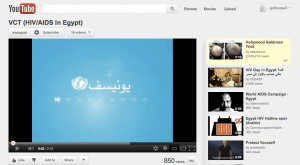
To watch video produced by UNICEF on VCT in Egypt click photo.
Jennifer Busse RN, FNP-BC, MPH is a family nurse practitioner and specialist in HIV care and prevention, working as an FNP with a Bronx Lebanon Hospital clinic for the underserved. For further questions, she can be reached at cairofrombelow@gmail.com.
صحة فقراء المناطق الحضرية في القاهرة:اللاجئين المصابين بفيروس نقص المناعة البشرية–الايدز
هذه أول مشاركة ضمن سلسلة من المقالات حول القضايا الصحية التي تؤثر على فقراء المناطق الحضريه الفقيرة
هناك اكثر من 51000 لاجئ مسجلين حاليا بمفوضية شؤون اللاجئين في مصر.93% منهم سودانيين وصوماليين و عراقيين و معظمهم استقروا فى المناطق الحضريه وفى القاهره بشكل اساسى. مع العلم ان هذه الارقام لا تمثل مئات الالاف من “الملفات المغلقه” (من تم رفضهم كلاجئين من مفوضية شؤون اللاجئين) والالاف من الفلسطينين المقيمين فى مصر بين هذه الفئة من السكان ,عدوى فيروس نقص المناعة البشرية يضيف تعقيدات كبيرة في وضعهم الهش بالفعل داخل مصر، والمجتمع القاهري خاصة.
بينما لا ينظر للقضايا الصحيه عاده كقضايا حضريا,ولكن فى الواقع, الصحة هي واحدة من أهم القضايا في تقديم الخدمات العامة في المدن,وضع اللاجئين هو ايضا مساله مهمه فى المدن,حيث ان حالتهم الصحية تؤثر مباشرة على الصحة والحالة الاجتماعية والاقتصادية للمدينة التي يعيشون فيها.
ويمنح اللاجئين عدد قليل جدا من الحقوق الاجتماعية أو الاقتصادية في مصر والتي تعتمد أساسا على المفوضية والمنظمات غير الحكومية للحصول على المساعدة , انهم يتنافسون على الموارد الصحيه المحدودة أصلا . ليس فقط هناك وصمة عار التمييز الشديد بين اللاجئين في القاهرة، ولكن ايضا اصابتهم بفيروس نقص المناعة البشرية مما يضيف حاجز اخر للرعاية الصحية. فيروس نقص المناعة البشرية هو مرض مخزى شديد العدوى في القاهرة، ويرجع ذلك أساسا إلى المفاهيم الخاطئة حول طرق انتقال والوقاية. ويعتقد أن فيروس نقص المناعة البشرية عادة ما يكون فقط بين مدمنى المخدرت و الفاسقين ويعتقد كثير من الأحيان إلى أنه يتم انتقاله في من قبل الأجانب.
وقد حدد البنك الدولي المخاطر العالية للإصابة بفيروس نقص المناعة البشرية ارتباطها ارتباطا وثيقا بالبطالة والتشرد والفقر. ويتمثل إحباط الحكومة المصرية للتكامل الاقتصادي والاجتماعي للاجئين في القاهرة في غياب وجود الحق في العمل بعض المظالم القانونيه الاخرى,وهذا يدفع الكثير من اللاجئين للبحث عن عمل فى اضعف المناصب فى سوق العمل الغير الرسميه.
وفقا لاتفاقية اللاجئين لعام 1951، يتعين على الدول المضيفة توفير المساعدة الاجتماعية والطبية العادله للاجئين مساوية لتلك التي تقدمها لمواطنيها.الوقايه والرعايه لفيروس نقص المناعه البشريه (الإيدز) غالبا ما يتم تجاهله ، لا سيما في البلدان المثقلة بالفيروس فى مواطنيها، ولذلك على الاغلب اللاجئين غير مدرجين في سياساتها الوطنية لمكافحة الإيدز .
قبل عام 2004، إذا تم العثور على الأجانب مصابين بالفيروس، يتم ترحيلهم في غضون 48 ساعة في محاولة لاحتواء انتشار الفيروس.بعد مناقشات مع مفوضية شؤون اللاجئين، ووزارة الصحة والسكان و البرنامج الوطني لمكافحة الايدز يتم إعفاء أي لاجئ او شخص مسجل تحت حماية المفوضية من هذا.و مع ذلك الاجانب الغير لاجئين المصابين سوف يتم ترحيلهم. ونتيجة لذلك، العديد من منظمات اللاجئين تشجيع اللاجئين على الحفاظ على سرية وضعهم من الفيروس..
خلال السنوات الثلاث الاخيره, وضعت وزاره الصحه والسكان بالتعاون مع المنظمه الدوليه لصحه الاسره نظام طوعى سرى للكشف والاستشاره بالقاهره,ولكن اللاجئين غير مسموح لهم استخدام هذه الخدمات الوطنيه ويعتمدون على المنظمات مثل “ملجا مصر” التى تقدم نفس الخدمه فى عيادتها بالقاهره.منذ 2005 خطه العمل الوطنيه الخاصه بوزاره الصحه والسكان سمحت للاجئين المصابين بالايدز العلاج بمستشفى الحميات بالعباسيه ولكن الخوف من الترحيل يمنع الكثير من الحصول على هذه الرعايه الصحيه.
ولان اللاجئين ليس لديهم اى امكانيه للحصول على مضادات الفيروسات ,اصاباتهم عاليه جدا و حالتهم الصحيه سيئه جدا. “ملجأ مصر” لديها كميات صغيرة من العلاج الوقائي بعد التعرض للاصابه لضحايا الاغتصاب، وجرعة من العقاقير المضادة للفيروس لمنع انتقال العدوى من الأم إلى الجنين، ولكن ليس هناك إمكانية الحصول على العقاقير المضادة للفيروس على المدى الطويل.
وبدأ أعضاء مجتمع اللاجئين، ولا سيما المجموعات النسائية في القاهرة، في دعم العاملين في مجال الجنس، على الاعتراف بحاجتهم الخاصه لمعرفة المزيد حول الوقاية من فيروس نقص المناعة البشرية،و ومؤخرا وفرت “ملجا مصر”الفرصه للخبراء للتكلم فى المناسبات الاجتماعيه عن الايدز . لم يعد فيروس نقص المناعة البشرية مرض بين فقط هؤلاء “المسجلين خطر”، والفئات المهمشة، لكنه آخذ في الانتشار إلى عامة السكان بمعدل سريع.المزيد من التعليم ، وتعزيز فرص الحصول على الرعاية أمر بالغ الأهمية للمحافظة على الصحة للاجئين في القاهرة، وكما ذكر سابقا، سكان القاهرة..
لمشاهده الفيديو اضغط على الصوره
جنيفر بوس ممرضة ومتخصصة في مجال الرعاية والوقاية من فيروس نقص المناعة البشرية، وتعمل مع عيادة مستشفى برونكس لبنان للفقراء.للمزيد من الاسئله يمكن التواصل معها على الايميل cairofrombelow@gmail.com
——————–
Translated by Hazem Adel, Ain Shams University, Faculty of Engineering, BSc Architecture 2011


 Cairo from Below القاهرة من الأساس