
Background
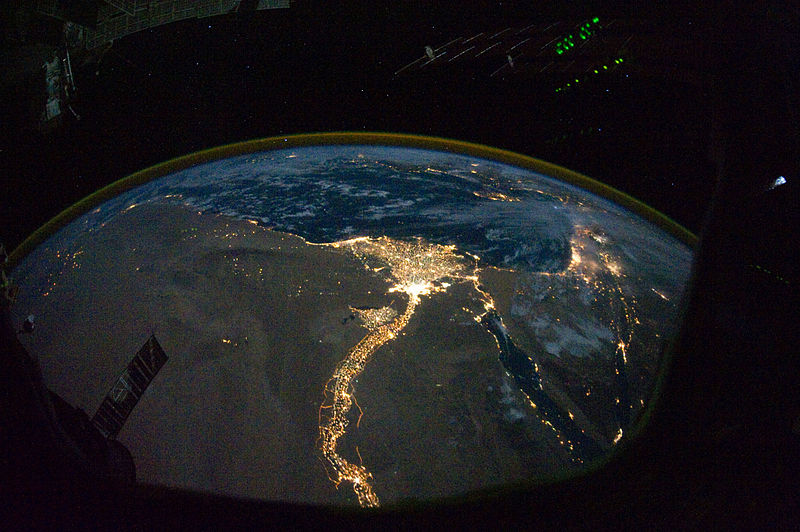
The Nile Delta is a very challenging area, with very dense housing, growing pressure on the agricultural land, high water demands and high population growth. Villages of the Nile Delta are now served with water supply, but few of them already benefit from proper wastewater collection and treatment. There is a clear demand to properly dispose of wastewater in small communities, with some of them building “informal” or “groundwater lowering” sewer systems. Otherwise, people rely on on‐site sanitation. In both cases, wastewater and sludge are dumped in the nearest water body (drain or, often and illegally, canal) or directly on agricultural fields. At the same time, the situation is worsening due to rising water tables caused by perennial irrigation and increased provision of drinking water, often leading to the malfunctioning of existing on‐site treatment facilities. So far, there is no viable small‐scale system (including viable financial and management schemes) available for replication in Egypt. Most small‐scale initiatives in Egypt did not stand the test of time or remained at a pilot stage.
The process of disposal of wastewater in Egyptian villages represents a dangerous challenge to environment and public health. In spite of the fact that at least 85% of rural residential buildings have some type of sanitary facility, a limited percentage of villages have recent facilities for safe collection, conveyance, and treatment of wastewater. Water pollution in canals and drains still represents the greatest threat to public health. Currently, wastewater is finally discharged (with or without treatment) to agricultural drains and sometimes to canals, where its use becomes unsafe. Also increased subsurface water level within boundaries of human settlements in villages makes many septic tanks (house vaults) a useless (not effective) mean, in addition to damages they cause to the houses. The challenge imposed by sanitation problem in rural Egypt was developed from wastewater collection only to how to safely dispose of wastewater, and the domain of the problem was enlarged from the house level to the irrigation system level.
Up to now, very little has been done for sanitation in small and mid‐sized settlements in the Delta. People rely on on‐site sanitation or informal sewer systems, with the wastewater and sludge being dumped in the nearest water body or directly on agricultural fields. At the same time, the situation is worsening due to rising water tables caused by perennial irrigation and increased provision of drinking water, often leading to the malfunctioning of existing on‐site treatment facilities. As a consequence, water in the drains and groundwater are heavily contaminated (Abdel‐Shafy and Aly 2007; EcoConServ 2007; HCWW 2008). As mentioned by Prof. Ahmed Gaber, Nile Delta villages are getting more and more “vulnerable”. It is expected that at least 15‐20 years will be needed to cover the backlog in rural sanitation coverage. Many people are now blaming decentralisation and so‐called “decentralised” systems. However thousands of villages and ezbas are not connectable to large sewer networks in the short and middle‐term. What is the alternative? If no alternative is provided, people will continue “business as usual”: discharging raw wastewater and sludge in drains and canals, injecting wastewater into the ground, or resorting to mitigation measures such as raising the level of their houses, as has already been seen in Kafr El Sheikh Governorate. So far, there are no viable small‐scale systems (including viable financial and management schemes) available for replication in Egypt. Most small‐scale initiatives in Egypt did not stand the test of time or remained at a pilot stage. It is high‐time to draw lessons learnt, in order to move forward.
Problem Definition
Conventionally, sanitation is measured by the possibility of connecting houses to systems constructed for wastewater collection and transfer to a site far from the house or public activity zones, or transferring wastewater outside human settlement boundaries 1. Official data indicates that 85% of rural residential buildings in rural governorates had some type of sanitary facility in 2002. Nearly 10% of buildings were sewered; the other 75% had some type of on-site storage (Septic tanks or house vaults). Coverage levels have improved steadily, and data obtained from the ORDEV Information Centre show that in 2003, the percentage of rural households without any type of sanitation latrines had decreased to between 2% and 6%.

These data indicate that sanitation coverage did not usually keep pace with water supply coverage. 1996 census results showed that 84% of rural households in rural governorates had access to water supply in the home; 40% house connections, 17% yard or building top, 27% hand pump. But in spite of this, Egyptian villagers remain at risk of water- and excreta-borne diseases. Visible manifestations of unsanitary conditions include heavily polluted waterways, street damp and occasional wastewater ponding, and solid waste accumulations in settled areas and waterways. In the absence of wastewater treatment and safe disposal, wastewater returns to the human environment through a number of pathways. Solid waste accumulations can pollute groundwater or surface water through leaching of contaminants or pollutants, and they attract insects and vermin, which may transmit disease. Increasing population densities and rising water tables in the Nile Valley and Delta allow for the increased movement of pollutants between groundwater and surface water bodies.
Problem Analysis
The first root cause of the problem of pollution and hygienic and environmental hazards in rural Egypt is the discharge of most rural wastewater to the environment with little or no treatment. The number of rural wastewater treatment plants in operation may not exceed 500, while the total number of villages exceeds 5,500. The number of village sewer systems is far greater than the number of village wastewater treatment plants. Many State-funded village sewer systems were constructed without treatment facilities in order to solve urgent problems of widespread septage ponding in streets and house collapse. Moreover, an undetermined number of villages, especially villages in areas of high water table, which are prone to these types of wastewater up flow, have used self-help to resolve their problem by installing “informal” sewers on a household, neighborhood, or village scale. The public sewer systems discharge to agricultural drains, but the informal systems may discharge to drains or canals.
The second root cause of the contemporary rural sanitation problem in Egypt is that population growth, water scarcity, and above all increasing poverty level in last three years especially in pre urban and rural areas alongside, expanded residential area are bringing wastewater disposal points into closer proximity with water abstraction points. The nexus of factors associated with this root cause is complex: Population growth has led to an expansion of settlements over the waterways. The possibility to dump wastes into a waterway has been increased than before. Water tables are rising as a consequence of perennial irrigation and increased provision of drinking water. These factors lead to the failure of on-site sanitation systems and to the increased exchange of pollutants between surface water and groundwater.
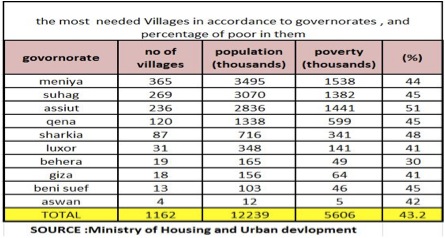
Water demands are increasing, resulting in increased need to reuse drain water for irrigation, particularly by tail-end farmers who suffer increasingly from shortages as water scarcity grows. Drain water reuse is not a marginal or deviant phenomenon in Egypt. With growing water scarcity, drain water reuse is now a central GOE strategy for increasing Egypt’s water efficiency, and MWRI expects drain water to supply 10-15% of Egypt’s water requirements by the year 2017. Drain water pollution is a threat to this goal.
Ayman Ramadan Mohamed Ayad is an engineer and Water Resources Advisor at National Water Resources Plan (NWRP-CP), and has been involved in the future vision for Alexandria integrated water urban development. He also teaches applied hydraulics at Alexandria Universities, and serves as the Egyptian Coordinator for NAYD (Network of African Youth for Development).
Our colleague at Cairobserver, an incredible writer and academic on architecture, urbanism and culture in Cairo, has an excellent form of feedback on his site. What he calls “Resident Perspective” is an opportunity for readers (you!) to discuss their views of the place they live, and the spaces they spend most of their time. The product of these Resident Perspectives, is a series of stories from Cairenes from all neighbourhoods about their link to their habitat, their praise of it along with their frustrations; it is a vibrant collection of the voice of Cairo residents. Read the most recent Resident Perspective here. Offer your own to Cairobserver here.

Photo from Cairobserver
Cairo from Below readers and enthusiasts, we are excited to begin bringing you something a little different that we hope offers a nuanced view of urban planning in Cairo. We will begin to post in-depth interviews with urban planning experts, academics, and activists. This will be something we will do along with our existing format of informational posts, opinion pieces, analysis and relevant event announcements.
—
I recently had the opportunity to interview Ms. Marwa H. Ghazali, a Ph.D. Student in Medical Anthropology and Graduate Instructor in Humanities & Western Civilizations at the University of Kansas. We discussed her research on the City of the Dead. Located below the Mokattam Hills in southeastern Cairo, this 4-mile (north-south) dense grid of tombs and mausoleum structures (also called the Cairo Necropolis), is a cemetery where some Cairenes live and work.
Below is a transcript of CfB’s Dana Kardoush’s interview with Graduate Instructor Marwa Ghazali about her anthropological research in the City of the Dead. We hope that these different perspectives, coming from an anthropological stance, will complement the existing research and work on the CfB website.
What was it that drew you to explore the City of the Dead?
On a drive to catch a flight to Egypt for an internship with the World Health Organization (WHO) in 2007, my father, an Egyptian native, began to talk about an interesting phenomenon which he had noted: attachment to place as a defining feature of what it means to be an “Egyptian.” He explained to me how he has noticed a general tendency among Egyptians to hang on to their apartments and other places of habitation, even when they go uninhabited.
He went on to reveal the conundrum of the people who live in cemeteries, a situation which I had previously been unfamiliar with. How do these people understand their “Egyptian-ness” in the absence of this important attachment? What has caused the habitation and conversion of sacred spaces (such as cemeteries) into social spaces where people get married, have sex, bear children, have weddings, and socialize? In a predominantly Muslim society, how have the edicts regarding the sanctity of cemeteries become so transformed?
These questions led me into an exploration into the City of the Dead. However, in a conversation with my supervisor from the WHO, I was told that I should not concern myself with this population as “most of them now have access to running water and electricity.” I found this attitude alarming to say the least. I decided that I had to understand, and to shed light, on the process by which people fall into such devastating states of poverty that they come to inhabit spaces of death. I returned the following year and began my fieldwork in the City of the Dead.
When did individuals and communities begin inhabiting this area?
It is difficult to date because there is such a diversity of timelines and an ongoing influx of people. Several families migrated during the war in 1967. My father’s family was among those who migrated from Sinai to Cairo, but were lucky enough to find an apartment. Those who came later or those who could not afford formal housing, began squatting in the cemeteries informally. There are others who, for generations, have lived in the cemeteries as professional caretakers or turaby.
Another major reason for the habitation of cemeteries is the overwhelming influx of rural-urban migrants who are unable to support their families with the heavy crop quotas instituted by Mubarak or who are unable to produce crop yields that are profitable. As more people migrate to these areas due to poverty and the inability to find affordable housing, the job security of the turaby is challenged. Families who own the graves are now able to enter into negotiations with squatters, in which they allow the family to live in the tomb, and pay them only a fraction of what they pay a professional turaby to care for the tomb and deceased, as well as to oversee burial procedures of newly deceased relatives.
There are families today who are moving into the cemeteries due to the inability to pay rent, medical bills, or because of family feuds, etc. The diversity reveals the ongoing problems that Egypt faces even in the 21st century.
Have you spoken with residents in the City of the Dead?
I spent the summer engaging in what anthropologist Clifford Geertz has called “deep hanging out” where I conversed with people living in this community, met children and families and vendors who sell leftover/damaged produce at lower rates, and spent the day engaging in participant-observation of every day life. I collected several “narratives of suffering” from various individuals as to the reasons that brought them to their current living arrangement. Below are two examples. *
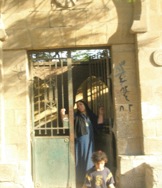
Photo Credit: Marwa Ghazali
Manal’s Story:
In 2008, Manal, her husband, and their two children had been living in the cemeteries for seven years. Prior to that, they lived in a government subsidized housing unit. However, Manal soon fell ill and was diagnosed with chronic kidney disease. She and her family sold their apartment and all of their belongings in order to pay for treatment. They moved in with her in-laws temporarily. However, this living arrangement, about 10 people living in a two-bedroom apartment, grew to be unbearable. Manal discussed the verbal and emotional abuse she suffered as a result. Leaving this arrangement in an effort to salvage what was left of their kinship relations, her family soon found themselves on the street. They made their way to the cemetery intending to spend one night and, as she explained, this is where they have lived ever since. The tomb she inhabits now however was not the first she had lived in. Her family squatted in a different tomb until the owning family discovered that the sanctity of their family tomb was “violated”, as Manal put it, and kicked them out. Manal and her family then moved to the tomb they now live in and entered into an agreement with the family which allowed them to stay in exchange for tending to the cleanliness and upkeep of the area, and making constant prayers for the deceased relatives. Since her move to the cemeteries, Manal has never returned for another round of treatment. The treatment itself is too expensive, and the cost of transportation further complicates her ability to access treatment.
Heba’s Story:

Photo Credit: Marwa Ghazali
Heba, another woman I met in the graveyards, demonstrates how cultural norms and gender inequalities can lead to a diminished quality of life. She came from an affluent family, the daughter of a military man. This family background allowed her to complete her education through high school and offered her many prospects. However, after her father passed, her brothers became her legal guardians in accordance with the Islamic practice known as walii. Heba soon fell in love with a man from a lower socioeconomic class than her own, who happened to be illiterate, or, basmagy. Her brothers, opposed to the cross-class marriage, and to their sister’s “modern” attempt at finding love outside of her brother’s guidance, threatened to kick her out and deny her inheritance if she married this man. Heba stood by her decision and was kicked out without any material belongings. She said, “my husband and I were homeless and we didn’t know where we would go. Suddenly, I put my hand in my pocket and I found the key to my family’s tomb. It was a mercy from God and a sign that I made the right choice. We came here and we have been living here since then.”
Does the government provide services to this area?
The government has attempted to provide services, though minimally, to popular areas like these as more attention was given to the situation of informal settlements. However, rather than relying on government aid, the inhabitants of these areas often unite and find creative ways to overcome the hurdles they face. For example, in several of the tombs, the residents were able to “steal” electricity from nearby stores and share that electricity between them.
Other modes of aid come from independent Islamic organizations, which recently installed a water fountain in one of these areas, for example. When I was there in 2008, the residents were extremely hesitant to criticize the efforts, or lack thereof, of Hosni and Suzanne Mubarak. I believe that when I return, this will not be the case.
What is the perception of most Cairenes of the City of the Dead?
In 2008, Cairenes generally were aware that there was habitation of the cemeteries, however, they were extremely detached from the practice. Despite their general lack of awareness, they often blamed these inhabitants for their “lazy” and “irresponsible” lifestyles. Though this tendency to blame the poor and to emphasize work ethic and individual responsibility is not uncommon in the dynamics between the urban rich and poor, during the revolution the narrative about the inhabitants of the City of the Dead began to change.
During the revolution, the City of the Dead, and those who live there, became a national symbol of the dire level to which Mubarak’s regime had sunk. It provided Cairenes with the legitimacy to argue that Mubarak was a tyrant that needed to be taken out of commission. “He allows people to live in graveyards, that’s how bad he is” was the general attitude during this time. I wonder now if the narrative will has changed or remained the same.
You suggest that anthropology can be one solution to misunderstandings and misconceptions surrounding the City of the Dead. Could you please explain your thoughts?
I believe that anthropology, and its insistence on ethnography, will help add the specificity, particularity, and context needed to better uncover the layers upon layers of structures, meanings, practices, and beliefs which have aided in the current situation in the City of the Dead, as well as providing us with phenomenological understandings of the experiences that come to be inscribed on the body-selves of these individuals and groups.
Currently, anthropologists are beginning to leave behind the idea that we can be neutral outside observers. Instead, we recognize that our very presence influences and changes the environment, so why not change it for the better? Cultural relativism must have limits that are defined by the contexts in which anthropologists find themselves.
That being said, overcoming blind relativism allows us to better see that living in graveyards is not a cultural, mystical, or spiritual practice. It is a product of structurally violent policies that have woven themselves into the social fabric of life in Egypt. Though these structures are difficult to discern, their identification is necessary in rebuilding a better Egypt after the revolution.
*Note: the names of the individuals mentioned have been changed to protect their privacy.
You can reach Ghazali at: marmoora@ku.edu if you would like to gain access to her recent Ph.D thesis presentation or information on her MA thesis which examined the rhetoric of overpopulation in Egypt that led to attempts to control fertility and reproduction and how this served as justification for the state’s failure to deal with the problem of dislocation of millions of people..
Dana Kardoush is Cairo from Below’s Communications Coordinator. Kardoush is an alumnus of Columbia’s School of International and Public Affairs (SIPA). While at SIPA, along with fellow classmates and colleagues in Cairo, she contributed to forming Cairo from Below. Kardoush’s interest lies in civil society mobilization and community-led development in the Middle East, and as a Palestinian-American, she hopes to return to live and work in Palestine in the future.
Below is a post by Heba ElGawish, a finalist in Cairo From Below’s Our Urban Futures Ideas Competition. Here she explains her vision for Cairo’s urban future. If you would like to share your vision for Cairo, please write to us at CairoFromBelow@gmail.com so that we can feature your idea on the CfB site.

The bicycle has been part of the Egyptian culture for generations, both as transport and a means of living (bicycles pushing vegetables and milk carts?). Our infrastructure is not able to support the ever increasing congested traffic anymore. It’s faster now to walk to places rather than take a cab or bus. Then why not bicycle there? It’s cheap (in the light of rising gas prices), it’s fast, and it brings people together through a community that strives for sustainability.
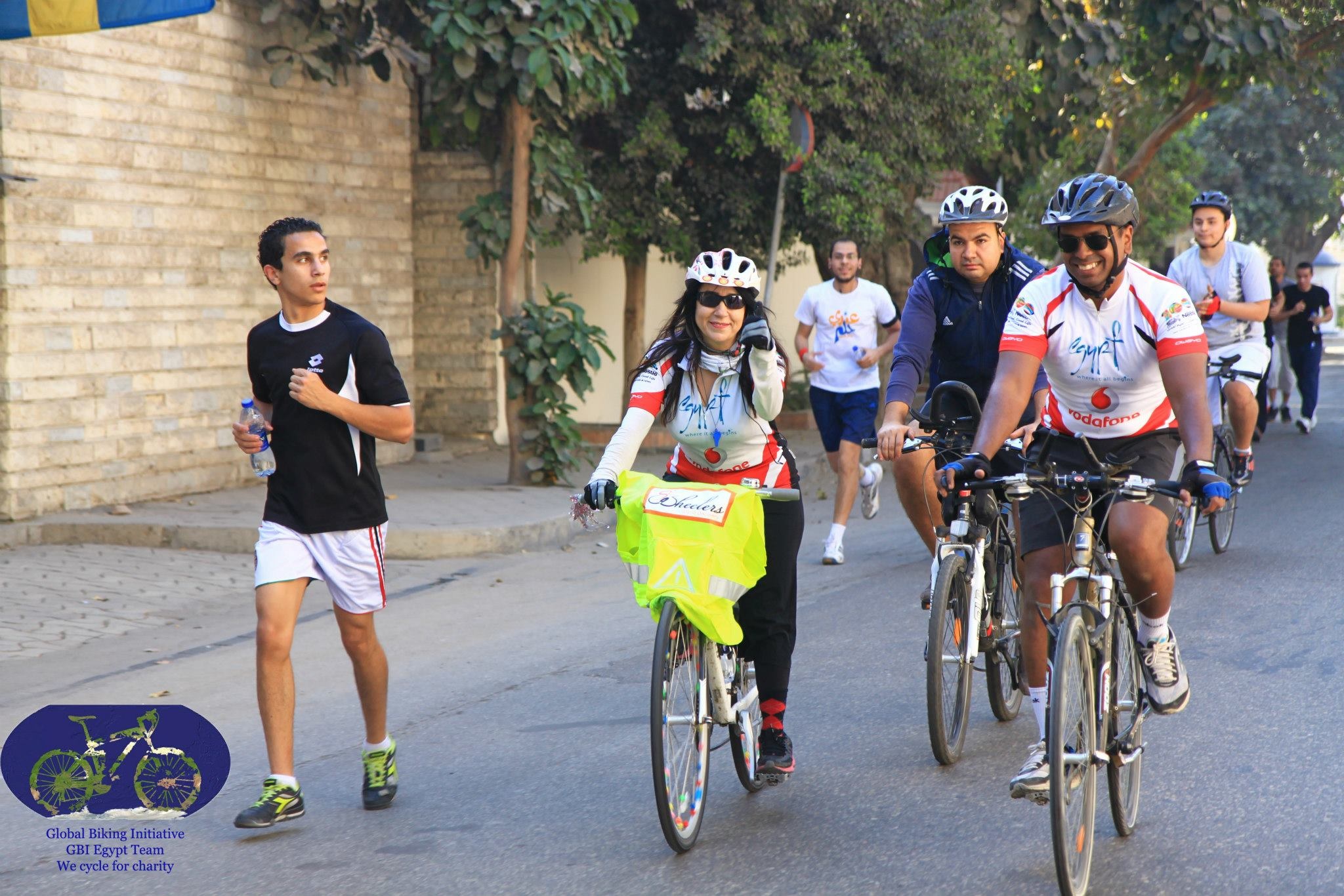
GBI with Cairo Runners in a “Critical Mass” type event (Mostafa Ahmed – GBI Team)
As much as this idea sounds challenging for a city known for its ferocious traffic, by using the right implementation and outreach strategies it can actually be successful. Given Cairo’s flat terrain, biking from one place to another is not very demanding either.
Cycling and running have already become popular in Cairo. Over the past two years, the Cairo Runners and Cairo Chapter of GBI (Global Biking Initiative) have grown to include thousands of active members. People are taking control of their personal health and well-being and reclaiming their streets and public space.
Mostafa Ahmed, A GBI Team member, said “I take the bike because it’s faster, healthier, and on top of that, you do something you love”. He also added that, “When the leaders of our GBI team started to go to their work by bikes, the next thing was other people bought bikes and started to cycle to work too, or leave their bikes at the Smart village, where their work lies, and cycle after work or early before work”.
Cairenes are striving to embrace a healthier, more sustainable lifestyle. A bike share program in Cairo will facilitate these individual initiatives while promoting public health awareness.

Ride Marshall explaining to a curious driver about the bike/ run initiative (Mostafa Ahmed – GBI Team)
The bike share system is a convenient and affordable alternative to motorized transport for both residents and tourists to get around the city. Workers use it to commute to and from work, residents can run their errands, and it’s also a great way for tourists to explore the city. The bikes can be taken from any conveniently located station by swiping a smart card, or punching in a code, then returned to any station at the end of the trip. The smart card also acts as a way to track the bike and prevent theft.
The bike share program also solves the first and last mile connection problem, especially where transferring from a metro station to a bus can be time consuming (e.g. reaching Heliopolis neighborhood to/from Saraya El-Qobba or Helmeyet el-Zaitoun metro stations). Another opportunity would be to connect Cairo’s East side to El-Zamalek and over to the West side without battling the highly congested traffic on the three bridges, 6th of October, El Tahrir, and 26th of July, that can consume over an hour to cross a 2 km stretch.
The program has proven successful in many urban cities around the world. In Barcelona, bike commuting has increased from 0.75% in 2005, to 1.76% in 2007, while Paris has shown an increase from 1% in 2001 to 2.5% in 2007, the year the bike share program Vélib was launched (DeMaio 2009). Washington, D.C. which has recently been named number one in traffic congestion in the Unites States has the largest and most successful bike share program in the nation. According to the 2010 Census, 3.1% reported using bicycling as their primary form of commuting in Washington, D.C.
The idea of a bike sharing system is not only a matter of commuting from point A to point B. The appealing aspect of this program to me is its sociological and societal impact on users and the city as a whole.
Positive impact on traffic and infrastructure
– Help formulate some traffic regulations where none exist
– Alleviate pressure on public transportation: As intensive and multi-modal as the public transportation in Cairo is, it still remains very much congested with no uniform schedule to rely on. Introducing a bike share program will supplement and improve citizens’ ability to get around.
– Opportunity to improve an otherwise deteriorating infrastructure: By incorporating bike lanes, and making streets more accessible to bikers, the city would have to revisit a lot of the traffic laws as well as improve road and street conditions which have been neglected for a long time.
– Traffic calming strategy: Sharing the roads with bikers and pedestrians forces drivers to become more aware of their surroundings, slow their speeds down, and use signals to alert their intention.
Positive Impact on Communities
– Encourage physical activity
– Create closer knit communities through a common interest
– Inclusion of all social classes
– Environmental and public health awareness
The successful bike share programs mentioned above provide guides and templates for new systems to be built upon.
Implementation
– Determine sponsorship and means of funding for the system (government, private, non-profit or public-private partnership)
– Intensive marketing campaigns, awareness and educational assemblies about the bike share program, as well as establishing a cycling safety program before launch
– Mass launching of the system in order for it to be functional and interconnected
– Complement existing public transportation network by placement of bike stations at each metro station
– Connectivity between different modes of transportation as well as last mile connectivity
– Survey of neighborhoods, especially those within 1 to 2 mile radius of subway stations for likelihood of usage
– Provide room for expansion in the program
Membership
Annual memberships can be made available for daily commuters while a daily or weekly membership is offered for occasional bikers and tourists. Acquisition of membership needs to be accessible to lower income users, especially in light of the fact that the majority of this group might not have access to bank accounts and credit cards. Membership cards can be verified through national ID number and home address and can be purchased through special vendors.
Ways to increase ridership
– Provide bicycle parking and showers at work places
– Implementing strict parking regulations to discourage driving
– Increase of on-street bicycle lanes for rider safety
– Locate bike stations at convenient and high pedestrian traffic locations, such as metro stations and central bus stations. This can encourage riders to opt for biking instead of using the highly congested public transportation system.
– Offer cyclist education sessions for bicyclists and drivers alike to increase awareness and proper safety measures
Challenges
– Theft
– Safety of riders
– Redeveloping streets to include bike lanes
– Cultural acceptance
– Funding 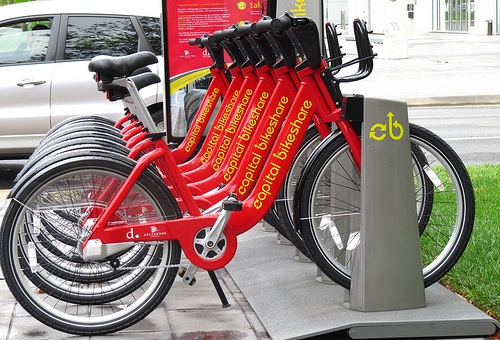
Means of Funding
– Government (e.g. Capital Bikeshare, Washington, D.C.)
– NGO/ Non-Profit (e.g. Denver B-Cycle, Denver, Colorado)
– Private sponsorship (e.g. Citi Bike, New York City)
Bike share programs can be regarded as a form of salutogenic design in urban planning, where the relationship between the public space, bodies, and minds come together through cycling, to create a healthy, sustainable city.
Heba ElGawish has, for the past 6 years, been working in Washington D.C. as a project designer for a structural engineering firm. She has volunteered on urban revitalization projects with Architecture for Humanity in both DC and NYC, as well as with PAO Architecture Summercamp in l’Aquila, Italy. In the fall of 2013, she will be starting a Master of Architecture program in Urban and Regional Design at the New York Institute of Technology. Her goal is to one day work on urban development projects in Egypt to create healthy, sustainable and equitable communities.
Good morning Cairo!
If the best way to get to know a city is by walking, the second best way has to be by running.
Today, May 10th at 6:00am marks the start of Cairo Runner’s first annual half marathon. The start and finish line is in Heliopolis (Almaza Garden, Marghany St).

Get out and run!
In addition to the 30 EGP registration fee going to The Egypt Liver Institute and Egypt’s Special Olympics, this is a great opportunity to get a little exercise for yourself and perhaps see a part of the city that you aren’t familiar with. If your not up for running, consider cheering from the sidelines.
Our friends at Cairobserver have a wonderful post up today on the half marathon and some of its political and urban design implications:
Cairo Runners has ignited its own revolution that challenges the accepted norms and injects athletic life into Cairo’s streets on a regular basis. Until Cairo Runners it was rare that athletes would take to the streets for exercise, partly because of the crowdedness and pollution. But also because the city has not invested in creating pedestrian friendly routes that encourage jogging.
Read the whole post and an interview with one of Cairo Runner’s organizers at
http://cairobserver.com/post/49629259032/running-the-city-the-making-of-cairos-marathon

Start Here
For more info on Cairo Runners:
http://www.cairorunners.com/#!half-marathon/ck9v
info@cairorunners.com
01200009098 or 01224185739
An earlier version of this article was published on Cairobserver:
http://cairobserver.com/post/46086204670/bulaq-the-struggle-over-a-neighborhood#.UXRYcIWbeyR
لقاء مع نائب محافظ القاهره عقب قطع أهالى بولاق لطريق الكورنيش http://www.youtube.com/watch?v=fn4JrnORrXI

بولاق أبو العلا : من يملك ؟ و من يعد؟ و من يستحق ؟
رسائل :
خرج أهالى مثلث” ماسبيرو” فى عدة وقفات أحتجاجيه حتى قاموا بقطع طريق الكورنيش فى أخر وقفه و ذلك بعد أستمرار تجاهل مطالبهم خلال الوقفات الأولى.
تقوم المحافظه بالتفاوض مع ملاك الأراضى ( المستثمرين ) لمحاولة أصدار قرار أستيلاء على جزء من الأرض لبناء 64 برج لأهالى ماسبيرو لتسكينهم بها, و صرح نائب المحافظ بأن عملية بيع الأرض تمت بين الأهالى و المستثمرين دون تدخل من الدوله, و أن دور المحافظه يقتصر على التنسيق من أجل توفير مسكن بديل للأهالى.
أكد أيضا نائب المحافظ أن هناك مخططات موضوعه لتطوير المنطقه و تحويلها الى فنادق و مبانى أداريه و غيره.
عرض :
مثلث ماسبيرو هو ذلك المثلث الذى تتكون أضلاعه من شارع 26 يوليو فى المنطقه الواقعه بين قنصلية أيطاليا و كورنيش النيل مرورا بمسجد أبو العلا و الضلع الثانى شارع الجلاء فى المنطقه الواقعه بين قنصلية أيطاليا و فندق هيلتون رمسيس مرورا بشركة أسكندريه للتبريد و المدرسه الأرمينيه و الضلع الثالث طريق الكورنيش من الفندق لوزارة الخارجيه مرورا بمبنى” ماسبيرو”.
يخترق المثلث شارع أبو طالب الممتد من شارع الجلاء حتى ظهر جراج الخارجيه موازيا لطريق الكورنيش, و بمجرد دخولك الى شارع أبو طالب تجد الكثير من المشاهد التى تجسد أهمالا متراكما يتمثل فى الحاله المتدهوره للمبانى و السيارات المنتشره فى الطريق التى يعمل بعض من أهل المنطقه على أصلاحها من أجل الحصول على قوت يومهم و ليس لدي أغلبهم ورش خاصه فقد يضطر الى المبيت فى كثير من الأحيان داخل أحد السيارات ليوفر ثمن الذهاب الى مدينة النهضه ( أحدى الأماكن التى وفرتها الدوله كبديل لأزاحة السكان عن بولاق) , فى شارع أبوطالب يمكنك أن ترى وجوه أرهقها العمر, لكن أبدا لم يهزمها, بعض من هؤلاء السكان رحل أبائهم من النوبه القديمه و أستقر بهم الحال عند ساحل بولاق ( الميناء القديم للقاهره ), و لم يكن يخطر ببالهم أن أجيالا قادمه سوف تتعرض لشبح التهجير و لكن هذه المره فى قلب العاصمه و ليس من أجل مشروع قومى ولكن من أجل بناء فنادق و منتجعات و مونوريل و أطماع مستثمرين.
بولاق بشوارعها و حواريها و أهلها جزء أصيل من قلب القاهره و نسيجها العمرانى القديم و هي حلقة وصل بين شبرا و السبتيه و رمسيس و القاهره الخديويه وهذا النسيج التاريخى هو دليل على الوجود و على البقاء.
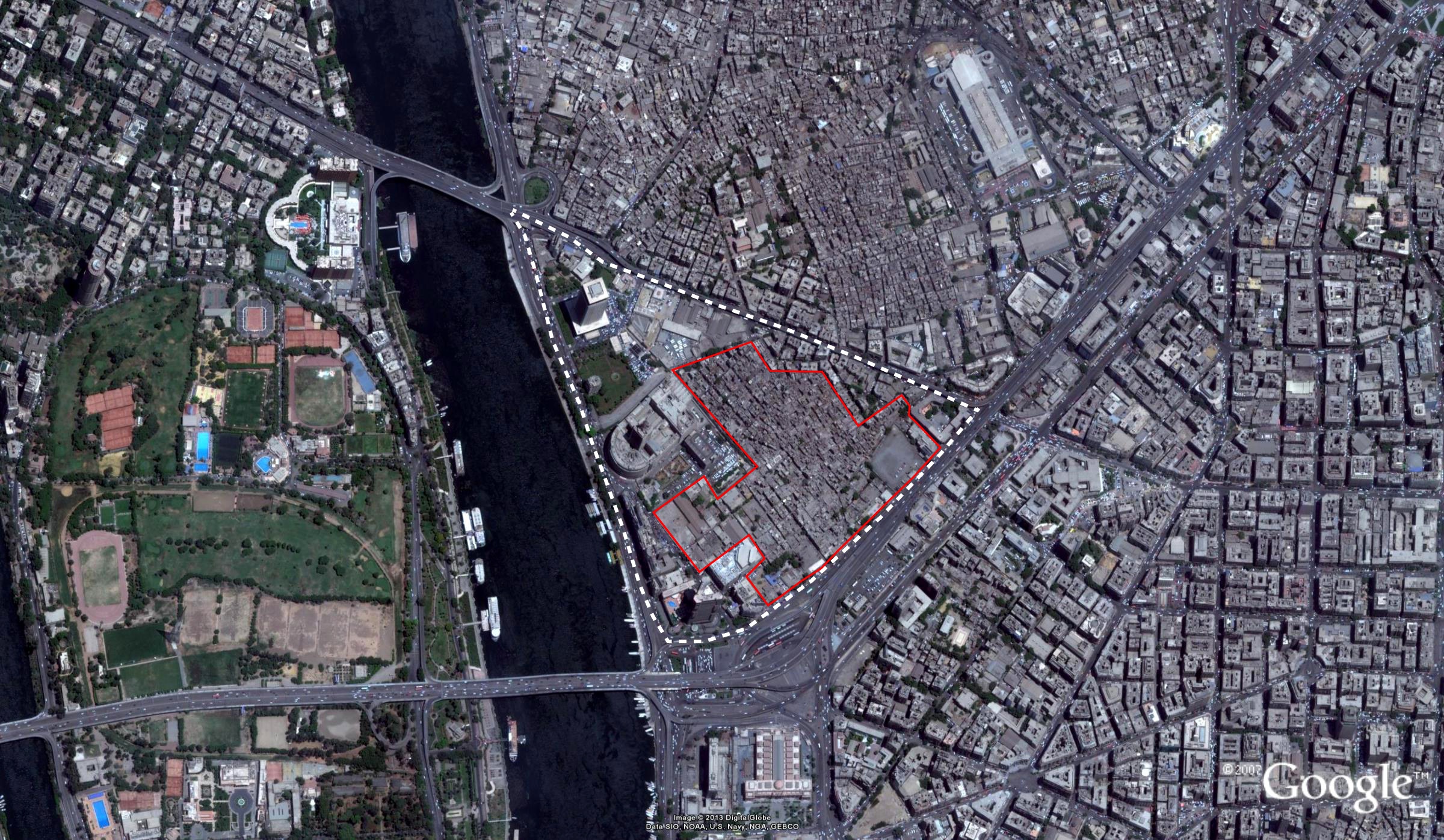
موقع المثلث و المنطقه المخطط أزالتها داخله
من يملك :
هناك بعض المبانى فى المثلث ملكيتها ثابته أو على الأقل غير متنازع عليها مثل : القنصليه, وزارة الخارجيه, مبنى الأذاعه, الفندق, مجموعه من العمارات فى حاله جيده على شارع 26 يوليو و الكورنيش, و المدرسه الأرمينيه.
و بالطبع فأن محل النزاع هى بيوت أهالى المنطقه الذين ليس لهم سند فلا هم فندق و لا وزاره و لكن الدوله تتعامل معهم على أنهم ملكيه عامه يمكن التحكم فى مصيرهم حسب هوى السلطه.
قامت الدوله ببيع هذا الجزء من الأرض منذ عدة عقود لمستثمرين من السعوديه و الكويت بالأضافه الى شريك مصرى هى شركه تدعى ماسبيرو لا أحد يعلم من يقف خلفها, و برغم من أن الدوله لا تملك الأرض و أن أهالى المنطقه يملكون عقود للأرض ترجع الى بدايات القرن الماضى و تنتمى لأجدادهم و لكن الدوله أتمت صفقة البيع و قامت بوضع مخطط لتطوير المنطقه فى أطار مخطط القاهره 2050 و قامت بتوفير مساكن بديله للأهالى على أطراف القاهره بمدينة النهضه و تم تسجيل العقود بأسم المستثمريين الجدد و ربما هذا ما تم أستغلاله للتحايل على العقود التى يمتلكها السكان حيث أنها تنتمى لعصر قبل أن يتم أعتماد نظام التوثيق فى الشهر العقارى و غيره , و حتى تضع الدوله السكان الذين رفضوا مغادرة منازلهم أمام الأمر الواقع قررت حظر الترميم و التنكيس للمبانى حتى يتثنى لها الأستيلاء على العقارات التى تسقط بفعل الزمن و يصبح الساكن أمام الرحيل للنهضه أو المبيت فى العراء, و لما كان أنهيار المساكن مسأله وقت لقدمها فكان حظر التنكيس و الترميم هو الحل السحرى للأستيلاء أولا بأول على أجزاء من الأرض مقابل مبلغ زهيد و شقه فى النهضه بأيجار أعلى من ااموجود ببولاق, و تكون هذه ورقه ضغط على السكان فى حالة أظهار عقودهم لتثبت أنهم قد تنازلوا , و أمام أبتزاز الحكومه لم يجد البعض مفر من الذهاب للنهضه و لكن الغالبيه صمدوا و ظلوا فى منطقتهم و أصبح الوضع الجديد أن الدوله بائع و المستثمر مالك و أصحاب الأرض الأصليين متطفلين, بل عائق أمام تطوير قلب القاهره فى حين أن بولاق ملك أهلها و القاهره ملك سكانها و ليست ملك مستثمر أو مسئول.

من يعد :
كن الوعد الأول هو أعادة تسكين أهالى المنطقه فى مدينة النهضه على طريق الأسماعيليه فى كتل خرسانيه فى الصحراء, بعيدا عن مدارس أطفالهم و أماكن عملهم و بعيدا عن محلات وسط البلد التى تمدهم بقطع الغيار و لوازم الحرف و الأعمال المختلفه من أصلاح سيارات و غيره, و أيضا بعيدا عن مختلف وسائل المواصلات فبولاق محاطه بمترو جمال عبد الناصر و موقف عبد المنعم رياض و العديد من وسائل المواصلات الخاصه ,و يترتب على هذا الأنتقال فى بعض الأحيان أخراج الأطفال من التعليم لعدم القدره على تحمل أعباء المواصلات و فقدان الأهل لوسيلة كسب الرزق المتمثله فى الورش المختلفه فلا يوجد من يقصد النهضه لأصلاح سياره مثلا.
الوعد الثانى بعد الثوره كان الأستجابه لرغبات الأهالى بعدم التهجير و بحث اليات أيجاد بديل ( حيث أن هولاء الأهالى حاليا ليس لهم صفه و هناك مالك اخر للأرض ), و تم التوصل الى بناء 64 برج على قطعه معينه من الأرض لم يتم تحديدها و أن كان الأهالى أقترحوا أرض شركة الأسكندريه للتبريد ب 22 شارع الجلاء و هى غير مستغله حاليا مع أستمرار تنفيذ مخطط التطوير من جانب الدوله و المستثمرين المجهولين على باقى الأرض, و أذا كانت الحكومه تنكر ملكية الأهالى للأرض من الأصل و تنكر أنها طرف فى عملية البيع فلابد من أن المستثمر قد أشترى من طرف ثالث !
الوعد الثالث و الأخير حتى الان عقب أحداث قطع طريق الكورنيش الأخيره و هو أعطاء المحافظه مهلة 3 أشهر للأهالى حتى تنظر فى قانونية وضع الأستيلاء على المساحه المطلوبه لبناء الأبراج و أن المحافظه فى وضع المنسق بين الأهالى ( المالك الحقيقى ) و المستثمر ( المالك الحالى ) حتى لا تتعدى على حقوق المستثمرين.
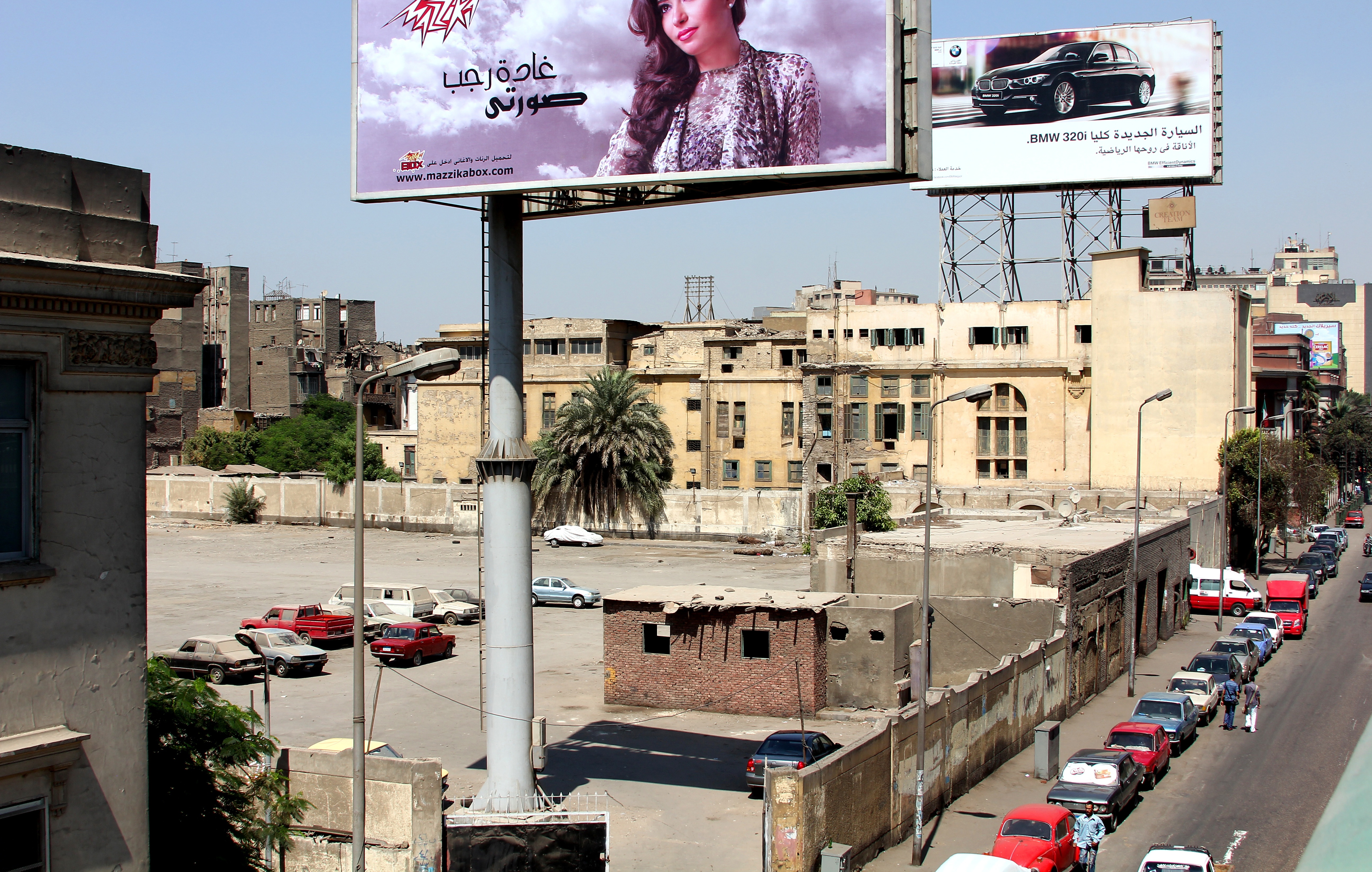
أرض شركة الأسكندريه للتبريد على شارع الجلاء
من يستحق :
مفهوم أن يكون طموح السكان هو ال64 برج فهو بالنسبه لهم أستحقاق أفضل من أن يجدوا أنفسهم فى الشارع أو فى مدينة النهضه فى صحراء لا يعلمون عنها شيئا و لكن الغير مفهوم أن تبارك الدوله بأجهزتها هذا الأستحقاق و أن تبارك مخطط تطوير يقوم بأزاحه مواطنين من أماكنهم و تكبيدهم متاعب يوميه أكثر و ليس مخطط لتطوير معيشة السكان أنفسهم و توفير حياه أفضل لهم فى محل أقامتهم.
أرض بولاق أستحقاق أصيل لأهل بولاق و أستحقاق أصيل لنسيج القاهره العمرانى و التاريخى لا ينبغى أزالته و لكن يجب حمايته و ترميمه و بقاءه كجزء من ذاكرة المدينه, حق تحديد المصير أيضا أستحقاق لأهل المنطقه فلا ينبغى لأحد التقرير بالنيابه عنهم بل دور الدوله هو حمايتهم من أطماع الرأسماليه و حمايه نسيج القاهره العمرانى القديم من خطر الأزاله, يجب توفير مسكن ملائم لأهل المنطقه على هذا النسيج و ليس فى أبراج. حق تقرير المصير هذا يجب أن يكون ناتج من حوار بين الأهالى و متخصصين و هذا يأخذنا لدور المحليات الغائب عنه التمثيل الحقيقى للمواطن.
القاهره تستحق أفضل من مخطط القاهره 2050, و تحتاج الى تطوير حياة سكانها الحقيقيين الذين هم دينامو الحياه اليوميه للمدينه و لا يستحقون التهميش, القاهره لا تستحق محو ذاكرتها المعماريه و تحويلها لدبى جديده تتنافس فى رؤيه النيل و أهلها يصارعون من أجل مأوى و لقمة عيش, قلب القاهره يريد أن ينبض من جديد بتحسين أوضاع سكانه و ليس بدعاوى تطوير زائفه, و كورنيش النيل حق لمواطنى العاصمه لا يجوز حرمانهم منه فى أنفاق حتى يتثنى لقاطنى الفنادق الأنفراد به بعيدا عن أنظار الماره.
لا تحتاج القاهره الى أبراج زجاجيه و مجتمعات مغلقه جديده فى قلب المدينه لخدمة شريحه معينه تريد أن تنعزل عن باقى المجتمع وتنفرد بالنيل حتى تتحول فى النهايه القاهره الى مجموعه من الحواجز و الأسوار نتحرك بينها مثل الأقزام.
تساؤلات :
هل حل المشكله فى توفير 64 برج أم الحل هو النظر فى جذر المشكله ؟
هل يجوز قلب الحقائق حتى يصبح الأهالى هم المتطفلين وقطاع طرق و هم من يثقلون بطلباتهم على كاهل الدوله ؟
ما المقصود بمراعاة السلميه فى التظاهر السلمى ؟ السلميه تشترط توافر حكومه محترمه تنظر فى مطالب المواطنين من أول وقفه أما مقابلة الوقفات بمبدأ الكلاب تعوى و القافله تسير يفتح الباب على مصراعيه للتصعيد و تخطى حدود السلميه حتى لأيصال أصواتهم .
.
ما هو دور المحليات و المتخصصين ؟ و ما هى حدود دور المسئول فى أتخاذ قرارات مصيريه تخص حياة المواطن ؟
لماذا لا تخرج الدوله ممثله فى المحافظ أو أيا من كان بمنتهى الشفافيه لتعرض علينا الطرف البائع للأرض هل هى الدوله أم الأهالى ؟
هل من المنطقى وجود مخطط لتطوير المنطقه لأستخدامات أخرى دون وجود نيه لأزاحة السكان ؟
هل من المنطقى أن تنكر الدوله ملكيه الأرض للسكان فى يوم من الأيام و تمنع تنكيس و ترميم المبانى و تعطى مقابل مادى من أجل نقل السكان الى مكان أخر و يكون الطرف البائع هو أهالى المنطقه و ليس الدوله؟
ما المقصود بكلمة تطوير هل هو محو ذاكرة منطقه و تغيير قلب المدينه على الخريطه, أم عمل مشروعات تنمويه تصب فى تحسين معيشة سكان المدينه اليوميه ؟
أذا لم يتم الأجابه عن هذه الأسئله بمصداقيه و شفافيه و وعى بخطورة ما نقوم به من أجرائات على المدى الطويل تؤدى الى طمس معالم المكان الذى نعيش فيه, فلنودع القاهره و لنرحب بعاصمه جديده كرتونيه, فالحلقه بين المواطن و المسئول و بين الدوله و المجتمع مفقوده, و ما بولاق الا حلقه فى سلسله متصله لمحو ذاكرة أمه بفصل المكان عن الزمان.
نعم للتطوير لا للتهجير.
لقاء مع أهالى بولاق
http://www.youtube.com/watch?v=mJM_mHmQYHE

صوره من مخطط القاهره 2050
( مش متأكد من مصدر الفيديو ده ) http://www.youtube.com/watch?v=JRxKT25fTsE
على محمد أحمد
مدرسة العماره و المجتمع – بوليتكنيكو دى ميلانو
جميع الصور من تصوير كاتب المقال
Please check out the event below. Should be an excellent opportunity to engage with experts and stakeholders in a discussion about the state and future of public space in Cairo. The registration form and agenda are available for download at the end of the post. If any readers attend and want to write a follow-up post reviewing the seminar, please send an email to cairofrombelow@gmail.com.

“Regeneration of Public Spaces in Central Cairo”
which will be held on Saturday 20th of April 2013, at 9:30am, at the Faculty Club of the Faculty of Engineering, Cairo University, Giza.
The seminar aims to bring together multi-disciplinary stakeholders to establish a platform of experts working on public space regeneration in its wide context. Through this participatory effort, we aim to share best practices, methodologies, approaches, as well as strategies in order to effectively tackle issues of planning, management, participation, Art and Culture and sustainability of public spaces in Cairo.
The seminar will be held in Arabic and will be divided into 2 parts. First part will include an introduction to the project . The second part will consist of a number of round table discussions followed by a brief of the seminar outcomes, setting the road map for a joint effort to regenerate our city spaces.
Kindly note that this is an open seminar, however a confirmation of your attendance is kindly required by filling out the registration form, indicating preference for roundtable of your choice, and emailing it back to cairorepublicspaces@gmail.com , no later than April 13th, 2013 for logistical reasons.

Advert for Film Screening at Megawra
[This upcoming event is reposted from Megawra – be sure to check out their website]
MEGAWRA FILM SCREENING AND DISCUSSION; 6 APRIL 2013 – 19:00
MEDIANERAS; WRITTEN AND DIRECTED BY GUSTAVO TURETTO
Medianeras (the name of this home-grown Argentine movie) is a Spanish term that refers to the tall and often windowless side façade of buildings. Gustavo Taretto (writer/Director) is trying to describe the network of interactions generated in Buenos Aires city as a representation of life in the modern era; this life which is full of segregation, contradictions and congestion. He also criticizes that modernity brought people closer in the world but further from their own lives.
The camera lingers on the skyline and the individual buildings of Buenos Aires, gray and inhuman. The buildings are seemingly endless, and many have blank, windowless sidewalls. These blank spaces are used for billboards, an ugly alternative to what could have been light-bringing windows, and many apartment- dwellers rebel by chipping through the concrete to place unauthorized windows.
Despite the urban philosophizing and exciting cinematography, “Medianeras” does not demand to be taken too seriously. It is an enjoyable romantic comedy movie.
Megawra has pleasure of inviting you to screening Medianeras and discussing how close the architecture status in Buenos Aires to the one we live in Cairo and the effect of the city as architectural product on our daily life.
Kareem Nems
عرض فيلم ومناقشة بمجاورة: 6 إبريل 2013 – السابعة مساء
ميديانيراس: تأليف وإخراج جوستافة تاريتو
Medianeras وهي كلمه اسبانيه للفيلم الارجنتيني المنشئ والتي تشير الي الحوائط الطويله الجانبيه من المباني الخاليه من الفتحات. جوستاف تاريتو (الكاتب والمخرج ) يحاول عرض شبكه التفاعلات المتولده في مدينه بيونس اٌيرس كتمثيل للحياة في العصر الحديث .هذه الحياه المليئه بالفصل العنصري والتناقضات و الازدحام . و ينتقد أيضا أن الحداثة التي جعلت الناس أقرب في العالم، ولكن أبعدتهم عن حياتهم.
الكاميرا تظل لفتره علي افق و مباني بيونس أيرس , فهي كئيبه وغير انسانيه , فالمباني لاتبدو لها نهايه وكثير منها يحتوي علي الحوائط الحانبيه الخاليه من الفتحات . هذه المساحات الخاليه تستعمل كلوحات اعلانيه وهي بديل قبيح عن كونها فتحات لادخال الضوء. وكثير من السكان يتمردون بكسر الخرسانه لوضع نوافذ غير مصرح بها .
علي الرغم من التفلسف الحضري والتصوير السينمائي الشيق , “Medianeras” لا يطلب أن يؤخذ على محمل الجد. فهو فيلم كوميدي رومانسي ممتع .
تسعد مجاوره بدعوتكم لعرض فيلم Medianeras ومناقشه تشابه الحاله المعماريه فبيونس أيرس والقاهره وتاثير المدينه كنتاج معماري علي حياتنا اليوميه .
كريم النمس
_______________________________
MEGAWRA (Built Environment Collective)
Address: 17 Amin Zaki St. Ard el-Golf, Cairo, Egypt.
Tel: (+2) 02 22911743
E-mail: megawra@yahoo.com
Blog: www.megawra.org
Facebook: Megawra focus group (www.facebook.com/groups/213229872049997/)
مجاورة_جمعية الفكر العمراني
17 العنوان : شارع أمين زكي ,أرض الجولف , القاهرة , مصر
رقم التليفون : 22911743
البريد الالكتروني : megawra@yahoo.com
المدونة : www.megawra.org
Megawra focus group (www.facebook.com/groups/213229872049997/)
Hi CFBers! Below are three upcoming events that should be of interest: (1) A press conference on the World Bank’s Impact on Egypt’s Built Environment on 20 March, (2) Life is Elsewhere: In search of the sweet voice of Tom Waits – a lecture by Ashraf Botros about the creativity process on 26 March, and (3) Urban regeneration: beyond the building – a lecture by Jason Hilgefort on 28 March.
Please check them out. If you attend and would like to write a post or review on any of these events please let us know.
Invitation for a Press Conference:
“The World Bank’s Impact on Egypt’s Built Environment”
Wednesday, 20 March 2013, 12:00 p.m:
At the Egyptian Initiative for Personal Rights office
6Dar al-Shifa St. (formerly Abd al-Latif Bultiya), Garden City
The Bank Information Center (BIC), in partnership with the Egyptian Initiative for Personal Rights (EIPR)’s program on Housing Rights, will hold a press conference to present research by Yahia Shawkat.
The study examines the World Bank’s recent profile of investments in Egypt, and the impact of these investments on the state of Egypt’s built environment. This analysis points to a need for greater focus on citizens’ needs in the design and implementation of projects.
The World Bank and other IFIs have long played a role in financing and shaping development projects that contribute to the systems and services that comprise the built environment in Egypt. The Bank invests heavily in energy projects, infrastructure services, and water projects throughout Egypt, and provides budget support and technical assistance to the Egyptian government.
During the press conference the publication will be presented and the floor will be open for questions and discussion. In addition to Yahia Shawkat, the panel will include a representative from BIC.
About The Bank Information Center
BIC is an independent not-for-profit organization based in Washington, D.C., USA that partners with civil society around the world to promote transparency, accountability and social and economic justice at the World Bank and other International Financial Institutions (IFIs).
N.B. Instant Translation to/from English will be provided during the press conference.
For inquiries, please call EIPR: 2793-3371/2/3
link to the invitation on EIPR website: http://eipr.org/en/pressrelease/2013/03/16/1659

الحياة هي في مكان آخر: الكشف عن الصوت العذب لتوم ويتس
Life is Elsewhere: In search of the sweet voice of Tom Waits
Megawra lecture on Tuesday March 26, 19:00.
محاضرة لأشرف بطرس عن العملية الإبداعية وخاصة تقييم المنتج الفني والمعماري من خلال الربط بيم فن الرواية وصناعة الأفلام والأغاني والعمارة. ضمن سلسلة مجاورة للعمارة والفن.
A lecture by Ashraf Botros about the creativity process and mainly about: evaluation of art and architectural products, with references to novel writings, film making, songs and architecture. Megawra occasional architecture and art series (in Arabic)
د.أشرف بطرس حاصل على دكتوراه في الهندسة المعمارية من جامعة القاهرة 1998 عن الثقافة والعمارة. يعمل في مجال التنمية المعمارية والتصميم العمراني.
Dr. Ashraf Botros holds a PhD in Architecture from Cairo University on architecture and culture. He works in the field of urban development and architectural design.
Facebook event:
http://www.facebook.com/events/471469676253915/#

Information and link on the Megawra event on Thursday 28/3/2013
Hope to see you there and please spread the word.
الإحياء العمراني: تجاوز المبنى
م. جيسون هيلجفورت
Urban regeneration: beyond the building
Jason Hilgefort
قضايا التراث الثقافي والفراغ العام والسياسات العمرانية للواقع العمراني المعاصر بتفاصيله اليومية «القذرة» من خلال عرض لمشارع في تركيا والهند والمغرب والقبرص وذلك بحثا عن سبل مغايرة للعمل (باللغة الانجليزية)
بمجاورة – الخميس 28 مارس 2013 – السابعة مساء
Referencing works in Turkey, India, Morocco & Cypress, the discussion will focus on issues of cultural heritage, public space, policy, and dirty daily contemporary urban realities in search of alternative methods of operating.
(in English)
Megawra, Thursday March 28 2013, 19:00
Jason Hilgefort studied urbanism at The University of Cincinnati and architecture at UBC in Vancouver. His works range from New York to Bombay. He is a project leader at Maxwan A+U, and has his own office Land + Civilization Compositions. He is also a contributor to uncube magazine.
درس جيسون هيلجفورت العمران بجامعة سينسيناتي كما درس العمارة بجامعة يو بي سي بفانكوفر. وعمل في مدن بتباين نيو يورك وبومباي. يعمل حاليا مدير مشروع بشركة MaxwanA+U كما يعمل من خلا مكتبه الخاص Land+CivilisationCompositions . كما يشارك بالكتابة في مجلة Uncube
http://www.facebook.com/events/368948809885572/
Address and directions:
www.megawra.org/map
Sara Hassan’s project was just one of the incredible ideas to come out of the Cairo From Below Our Urban Futures Ideas Competition. She has graciously written a piece about her experience working on this project to share with our readers.

The animated clip I submitted to the Cairo From Below Our Urban Futures Ideas Competition contains three parts:
1) Introduction of how public space looks in Cairo.
2) Interviews with people saying what they would like to see in public spaces.
3) Solutions without government help.
In Egypt, politics dictates how public spaces look. The regime has passed laws and implemented policies, which restrict the access of Egyptians to public space – places where civilians would gather, talk, interact and even demonstrate or hold protest. Urban spaces that could be used by people to gather and demonstrate were systematically divided or fenced. This policy is not only limited to public spaces, but also affects urban spaces and leads to urban degeneration.
Public Space plays a huge role in society. The typical image of Cairo is an over-populated city with a high-density of buildings and a lot of pollution. People yearn for change in their lives. Public space provides the community with a place to relieve the stress caused by the densely populated city, including unemployment, low income, poverty, etc. Here, people can communicate with each other, introduce themselves, celebrate together and engage in sports. Public space is a benefit to community and is compromised of historical, cultural and social dimensions. According to Omar Nagati, an architect and urban planner: “Public spaces unite all people: Men and women, Muslims and Christians, old and young, liberals and conservatives, rich and poor, etc. If you manage to solve this problem, then we have achieved solving major social issues”.
We have seen what happened in Tahrir Square during the Egyptian revolution. Mohammad Al-Asad, a Jordanian architect, said the following about Tahrir Square:
It was really fascinating how people took control and ownership of it. I mean you had a group of people who would collect the garbage and recycle it, you had a pharmacy, you had a childcare centre all created in that public space. It was truly a public space and people took ownership of it…
Many gardens are still closed with fences and remain unused, while there are other gardens that require an entry fee to enter, to which not all poor people can afford to go. Many parks neither have seats and benches, or even simple playgrounds. The government has ignored public spaces but promotes the development of closed communities (gated communities), private parks with playgrounds and shopping malls.
All of the points mentioned above are reasons why I started this project. I collected material with my family and our neighbours from a small village. Others I had previously never met, like Ulrike von Ruecker (founder of Rasheed22) also helped. We collected ‘shwual’ (rice sacks) of different colours, stuffed them with ‘karina’ (component of palm trees) and used them as chairs. We created tables from plastic bottles which were used as chairs as well. I removed the label from every bottle and glued them together to make a sunshade. The reaction from the people was positive. We tested this project in three different places:

Genena al-Maza
1) Genena al-Maza
2) Genena in Hadeqa Koppa
3) Public garden in front of the Bahria Academy
I left some of the chairs and tables in Garden 3, which taxi-drivers started using during their coffee/tea breaks. The next day I saw a few other taxi drivers using the sunshade I made and one of the shwuals as a pillow. The man who serves the coffee/tea had a small tent in which he kept all kinds of recycled materials. I was very fascinated by the creative items he had made.
In Garden 2, I interviewed a young man who told me that the things I made are very good and he wished that they would have been there earlier. He then pointed to the garden that is surrounded by a fence and said, “Why is this garden closed? We used to spend a lot of time there as kids and grew up there. Why is it closed? It used to be open for everyone!” When I asked him if he knows the reason, he couldn’t give me an answer. The gardens that I chose are situated in the middle of two roads parallel to each other, as shown in the animated clip. Private gardens are closed with fences, but have benches and playgrounds, while public spaces only consist of grass and palms. That is why I made this animated clip. I wanted to show everyone that it is useless to wait for improvements to happen by the elder generation to change it; it might take years or not even happen. My intention was to make simple objects, which other people could use immediately. Anyone can collect various materials and build interesting objects even better than mine.
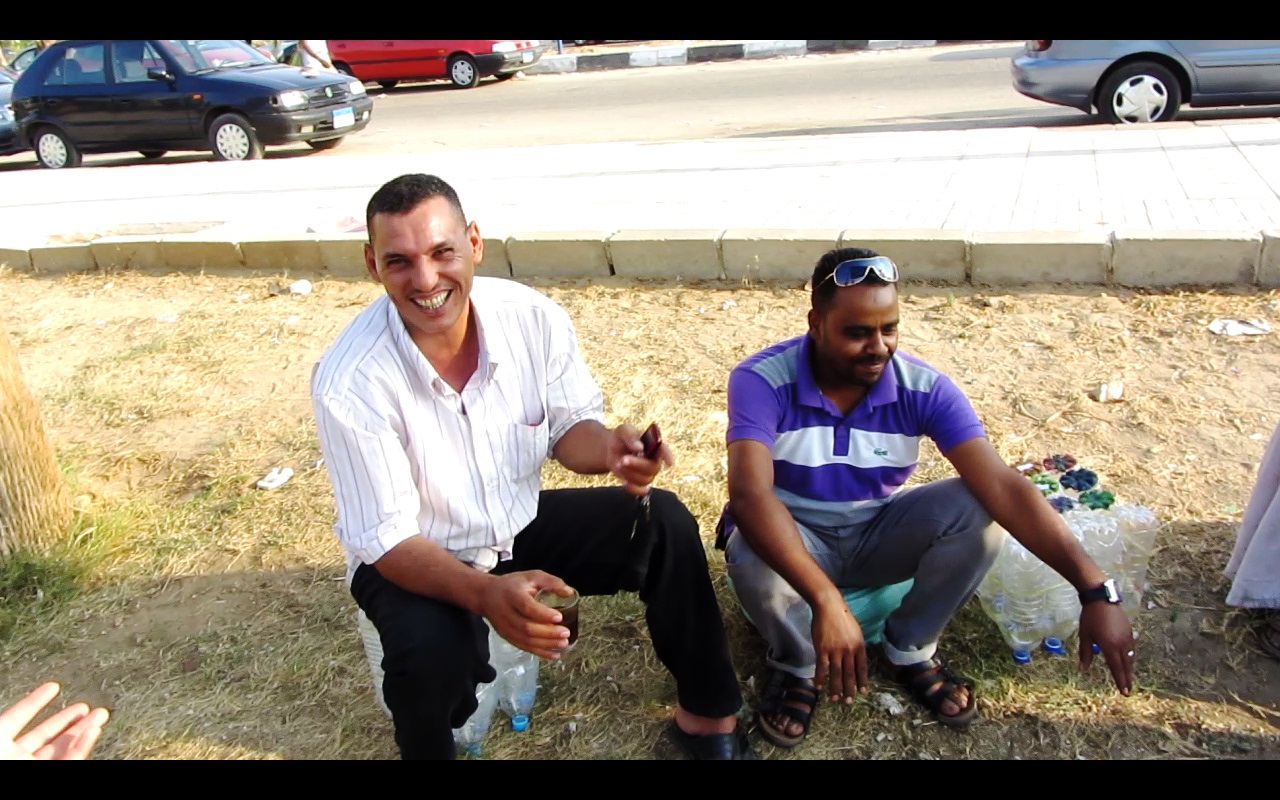
Acadamya Ba7ria – Interview
I also believe that social interaction within a community is very important. People can regularly meet in their local garden to discuss the issue of public space in their neighbourhood and engage in recycling material together. This attitude will create a positive social impact on everyone and raise awareness on the issue.
Sara Hassan is an architecture student at Technical University in Vienna. She is currently writing her master thesis, Mafto7 – Public Space in Cairo“ as well as is making a short film. She is also an activist at Amnesty International in Vienna. She hopes to reside in Cairo after her graduation this summer and to continue projects in public spaces in Egypt.


 Cairo from Below القاهرة من الأساس