
Kirsten Larson asks how architects and planners can help fight poverty without fighting the poor in her recent FAVELissues post entitled, The Right to the City.
Two quotes from her article below. Read her entire article on FAVELisssues.com
“The right to the city is far more than the individual liberty to access urban resources: it is a right to change ourselves by changing the city. It is, moreover, a common rather then an individual right since this transformation inevitably depends upon the exercise of a collective power to reshape the process of urbanization. The freedom to make and remake our cities and ourselves is, I want to argue, one of the most precious yet most neglected of our human rights.” – David Harvey, The Right to the City (2008), a postface to Social Justice and the City
The architect’s job becomes a tightrope walk between resisting the impulse to fetishize a harsh urban condition while still looking for value in the alternative spatial articulations that define the social and physical fabric of favelas.

To the uninitiated eye, Cairo may seem like an environmental nightmare. In fact, the density of Cairo represents one of the best strategies known to combat environmental destruction.
BikyaMasr ran an article this morning on the role of the environment in Egyptian politics today. According to the article, none of the parties have a stated environmental policy. Nonetheless, environmental concerns, urban and rural, remain a large and unanswered question.
Still, with the first round of voting over, the candidates have no clear environmental policy. Even more striking was the fact that no candidate, party or coalition even divulged a single sentence on the environmental future of the country, leaving many to worry that the situation facing Egypt ecologically, will continue to stumble into chaos, destruction and apathy.
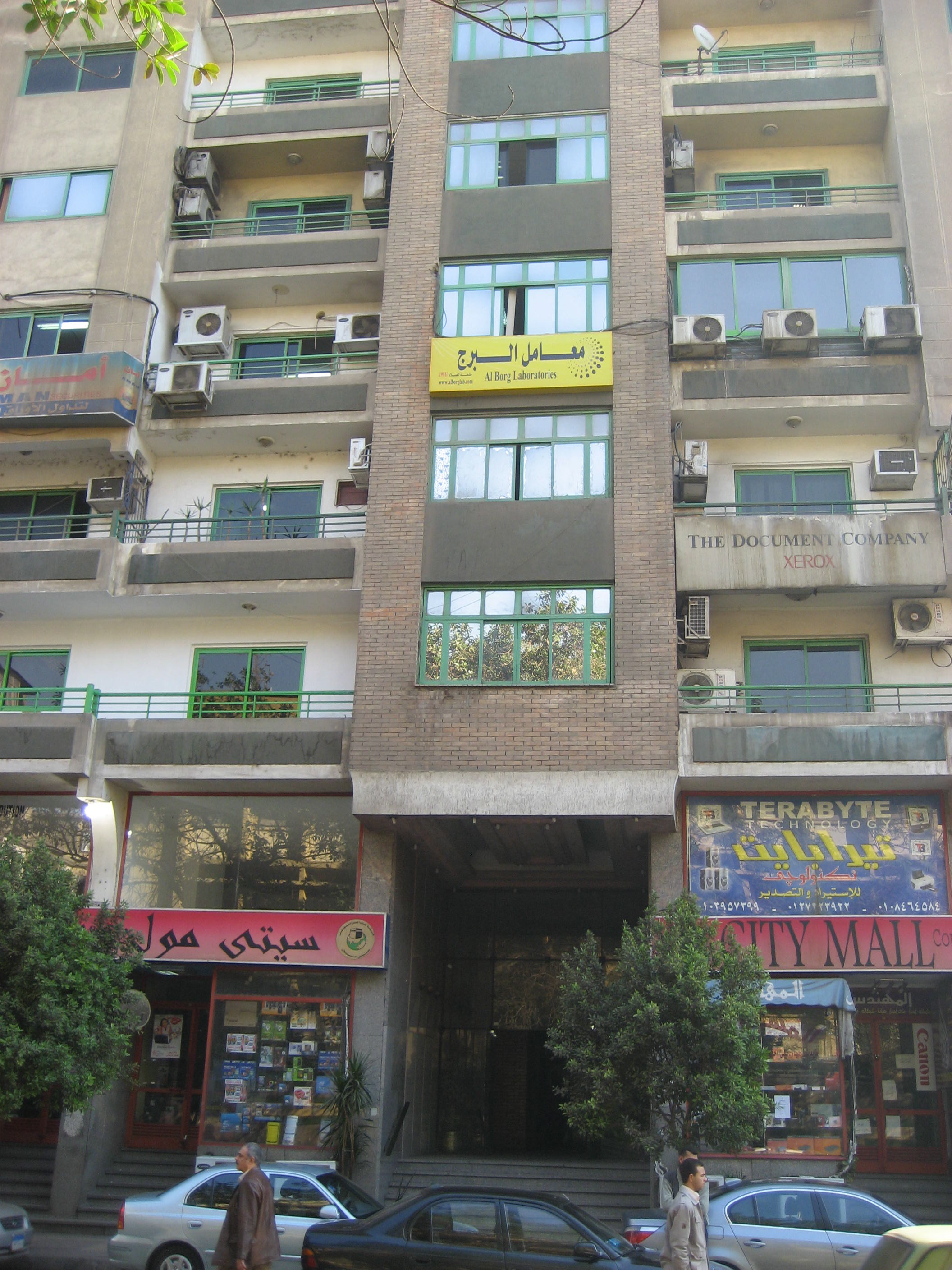
Streets like this one add up to make a big environmental impact - a good one
Often ignored in debates about the environment is the role of cities in offsetting environmental impact. It is through the density of cities like Cairo that we are likely to avoid the extreme environmental burden caused by sprawling (for very different reasons) cities like Los Angeles, in the United States, or Durban in South Africa. One of the leading environmental criticisms of sprawl is the increase traffic demand sprawl puts on a city’s streets and highways. Moreover, the building materials required to construct an apartment building are typically much less than those required for the detached housing typically constructed far from from the urban core.
While cities do produce pollution, they produce less pollution per capital than surrounding suburban models of development. Pollution is caused by people not cities, and people living together use less resources and thus produce less of an environmental impact. Despite the perception that the dense city is the source of pollution and moving outside of it will solve environmental problems, the opposite is in fact true. If one already lives in a dense city like Cairo, the best thing an individual can do for the environment may be to do nothing at all.
Nonetheless, documents such as Cairo 2050 have argued Cairo’s density needs to be reduced and that its population be spread out into the desert. Read more about Cairo 2050 on our Cairo 2050 page. What will future plans hold? What should future plans hold? Will Egyptians demand an environmental policy from candidates? Please respond or comment!
Read the whole article on bikyamasr.com:
http://bikyamasr.com/50289/going-green-in-a-new-egypt/?mid=5475

David Sims is a prominent scholar of Cairo’s political history and urban development. In his recent book, Understanding Cairo: The Logic of a City Out of Control, Sims conducts an in-depth and insightful analysis of Egypt’s complex capital. Especially noteworthy are his observations on the informal areas of Cairo. Check out a review of Understanding Cairo posted by the LA Review of Books: http://lareviewofbooks.org/post/12881896554/2050-or-bust.
- David Sims Understanding Cairo

Bit City Poster
The Bit City conference on transportation, data and technology in contemporary cities drew experts from around the globe to discuss the role of data in designing, revising and studying transportation from a variety of ways. Panelists shared perspectives from how taxi data can be used to provide transportation planners with alternate sets of traffic-flow data to the challenges of planning for telecom and bandwidth.
Conference proceedings can be viewed on http://www.livestream.com/GSAPP
Professor David Levinson challenged basic assumption of automobile route selection. Watch a the video from “panel 2” on the livestream link to hear more about this and its impacts for transportation planning based on outdated theories.


Top Tweets from the Conference:
New UN HABITAT office in Cairo : will it join with activists and stand up against forced evictions?
The Daily News Egypt is reporting today that UN-HABITAT is opening a regional office in Cairo on October 3rd, World Habitat Day.
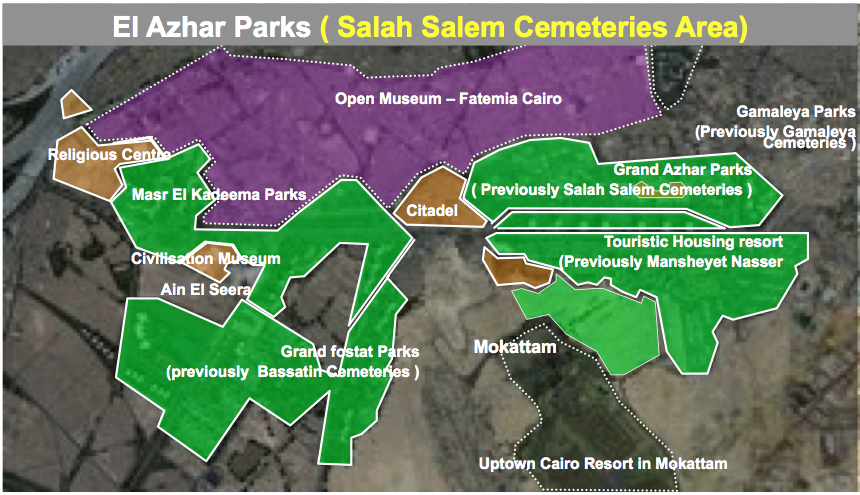
This screen capture from Cairo 2050 (source GOPP) calls for turning Manshiyet Nasser into a "Touristic Housing Developmet" without demonstrating a coherent strategy for rehousing those displaced. Will the next version of Cairo 2050, to be released next month, offer a more inclusive vision for the city? How can UN HABITAT join with Egyptian activists, architects and planners to work toward a more economically, socially and environmentally sustainable city?
According to the article, the new office will be responsible for coordinating programs in the region and may facilitate greater collaboration between the Arab League and the UN HABITAT program. “Cities and Climate Change” is UN HABITAT’s theme for World Habitat Day 2011.
As the article states, climate change is major force facing Cairo and many other cities around the world. Some of the poorest residents of cities such as Cairo live in neighborhoods that are highly vulnerable to climate-related impacts.
“Muhammad Kadhim, officer-in-charge and regional director for Arab States UN Habitat […] stressed on the importance of the protection of human rights – as stated in the UN charter – while carrying out any UN Habitat projects. Most importantly, UN Habitat is against forced evictions; inhabitants are only relocated upon their consent. Moreover, UN Habitat tends to focus more on developing habitats instead of relocating their inhabitants.”
UN HABITAT’s work in Egypt has, in general, been exemplary. See for example the report released earlier this year entitled, “Cairo a City in Transition” (link on our news and trending tab). UN HABITAT, however, also provided technical expertise in the development of Cairo 2050 (download Cairo 2050 and read a longer critique of the initiative on our Cairo 2050 tab).
Two of the projects outlined in Cairo 2050 such as the Corniche redevelopment, running through Bulaq, or turning Mansheyet Nasser into “Touristic Housing Resort” could displace hundreds of thousands of hard working residents who have lived there for generations and play a significant role in sustaining Cairo’s economy. The Cairo 2050 document does not propose a coherent alternative to the large-scale displacement and forced eviction of many of the city’s working class residents that would be caused by the projects it proposes.

Bulaq now and future? This slide from Cairo 2050 (source: GOPP) shows the Bulaq area transformed into a vast campus of high-end development. Where will these residents go? How will residents and businesses from other areas be able to use the many vital services and industries presently found in the Bulaq if this neighborhood of tens of thousands of families and businesses is transformed into a campus of skyscrapers?
The satellite cities Cairo 2050 proposes are more of a pandora’s box than a panacea. Developing them would have many significant negative impacts, including worsening the city’s transportation challenges and economic segregation.
With a new version of Cairo 2050 widely rumored to be released next month, it will be even more important to ensure plans offer a model of inclusive development that does not forcibly evict residents. UN HABITAT should continue to be a leader of social justice in urban development. It should endeavor to make common cause with the dedicated and skilled Egyptian planners, architects and activists who reject forced evictions and support an urban development strategy for Cairo in line with UN HABITAT’s stated goals of upgrading and improving neighborhoods for the betterment of all the city’s residents.
More information:

Mexico City will host the global World Habitat Day conference on Cities and Climate Change on October 3rd.
 The full report is available online for download.
 Amnesty International released a report on forced evictions in Cairo in August.
Nicholas Hamilton is part of team analyzing governance over land in Cairo for Columbia University and the Institute for Research and Debate on Governance
Cairo is a city saturated with traffic. Weekday mornings are a frustrating, lengthy journey of inching down roads and through smoggy intersections. A constant reminder of the poor planning practices, the congestion of Cairo is almost unbearable, and, according to author David Sims, it is not at even near its climax.
While many urban planners point to population density as the root of the congestion problem, Dr..Dina Shehayeb, professor at Egypt’s Housing and Building Research Center, argues that inappropriate zoning laws are to blame. In a recent article published in Al-Masry Al-Youm, Dr. Shehayeb explains that until the late 1980s, Cairo’s neighborhoods had a variety of zoning laws meant to preserve existing housing and urban layout. In the early 1990’s, the government repealed such laws, deeming them unconstitutional, and buildings skyrocketed in response, as private investors tried to maximize profit. This encouraged increased population density in some areas without investing in infrastructure to ensure residents could move around the city.
As the city begins to refocus its attention on urban issues, urban planners and city architects are attempting to address the inability of Cairenes to reasonably navigate through their city. “Various solutions are being proposed … from tunnels and overpasses, to buses and metro lines, to establishing more isolated, gated communities.”* Yahia Shawkat, an architect and researcher on urban policy, argues that developing a more efficient and extensive public transportation system is the only real solution; he asserts that widening roads is too expensive and creating tunnels and overpasses will increase pollution and ruin the aesthetic of the city.
Currently there are 2 functioning metro lines (with a third in the advanced stages of planning) and 500 bus routes in existence in Cairo. The majority of the bus routes are comprised of informal mini buses, privately operated, running fairly consistent routes. The Cairo 2050 vision document proposes construction of twelve new lines and upgrading roads and speed corridors connecting the city center to satellite towns. However, the document does not include logistical details and financial projections for upkeep and maintenance.
Issues of land speculation are an additional component in the traffic and transportation debate. While the interim government is prosecuting some land speculators, the Egyptian military remains the largest landowner in Egypt and potentially the most influential decision-maker and greatest beneficiary of the transport network’s expansion. Several cities around the globe, most notably Los Angeles, were built/designed under similar circumstances with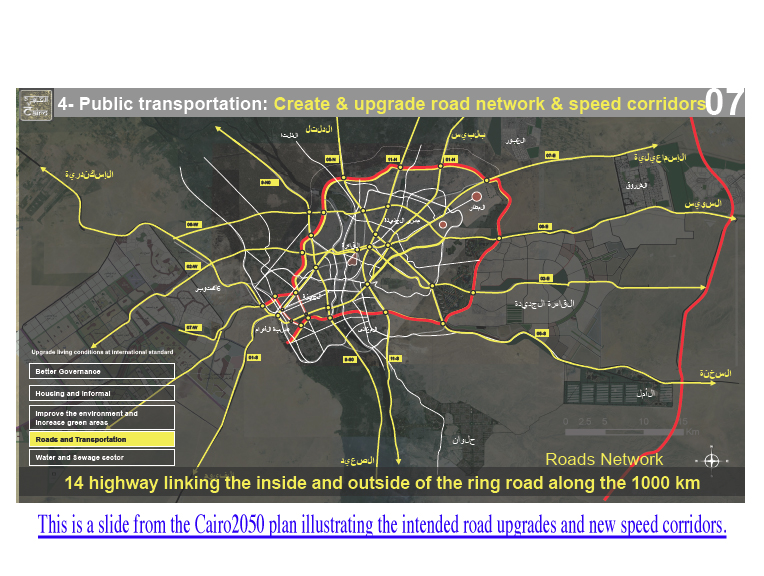 government officials engaging in land speculation. The result was most frequently dysfunctional dispersed cities, unable to capitalize on the economic, social and environmental benefits that relate to high density. A book entitled Cadillac Desert and documentary series by the same name about how land speculation impacted the city of Los Angeles was turned into a documentary and can be watched on youtube”
Confronting the congestion of Cairo will be one of the most significant issues that the city’s urban planners face now and in the future. Their debate, their strategy, needs to be established on the foundations of a system-based analysis and a thorough, thoughtful survey of the needs of all of Cairo’s residents. Increasing pedestrian safety, promoting alternative means of transport i.e. bicycles, should be included. Finally, nothing should be built without a cohesive and exhaustive plan strategizing not only construction, but upkeep and financing for the next few decades.
*http://www.almasryalyoum.com/en/node/479414
Meredith Hutchison is part of team analyzing governance over land in Cairo for Columbia University and the Institute for Research and Debate on Governance

(Image credit: favelaissues.com)
An important, yet often under-discussed factor that affects urban planning outcomes is the process through which planning decisions are made. The process reflects both the incentives guiding policymakers and the relative power of those policymakers at various levels of government. As such, the structure of Cairo’s local governance systems matters when discussing urban planning and decision making. Given the changes taking place in the country right now, with the possibility of restructuring government institutions, recognizing how existing governance structures worked and impacted urban growth is important.
One prominent feature of Egypt’s governance structure under the pre-January 25 regime was its strong centralization. In a great cross-disciplinary edited volume discussing modern Cairo’s governance and urban space, Cairo Contested (edited by Diane Singerman), academic and researcher Sarah Ben Nefissa points out that Cairo suffered from a very weak administrative system, due to “excessive centralization, lack of transparency, and communication failures between the administrative apparatus and citizens”. The Egyptian government kept power centralized, granting very little political power to local governments.
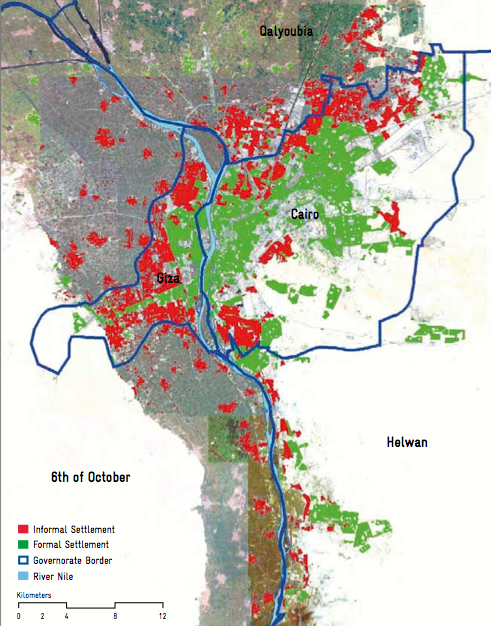
Governorates of Cairo metro area, also showing formal and informal areas (Image credit: GTZ/GIZ)
Greater Cairo’s separation into multiple political-administrative units, falling under multiple governorates, also made coordination in planning extremely difficult. District-level governance has ‘Local Popular Councils’ (LPCs – elected through local elections) and Council of Local Civil Servants (CLCS – appointed by district president). At the local level, there are overlapping administrative bodies, with each office having different sources of authority (the LPC, CLCS, and governor) creating further confusion. The elected LPC councilors have little authority as they once did during Anwar Sadat’s era, and have little say in budgeting and thus policy-planning. Therefore essentially, the civil servants and governors ran the districts. Power was extremely centralized in the governor’s hand, creating an “extremely inefficient system, corruption, and waste or theft of state funds”.
This structure then has implications for service delivery and urban planning. Since the central government controlled where the money went (governorates got 70% of their funding from there), they were able to decide which policies were followed. Decision-making about policy and resource-allocation was very top-down, and did not need to involve local communities. People had little say in how their money was spent in their neighbourhoods. So, if the central government preferred a flyover to the satellite towns in a densely-populated area over a road-widening project or more public transit options, it is clear which project would get the money and be completed.
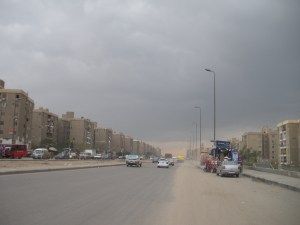
A large road passes through housing development in the Haygana area of Cairo (Photo credit: Meredith Hutchison)
The implications of centralization are reflected in the decision-making process where the ideology and interests of a few (usually privileged and well-connected) individuals guide decisions with impacts on a significant number of people. It also reflects that despite having the institutions, laws, and regulations in place on paper, the process through which these decisions are made, and the incentives that guide them matter greatly. For an urban planner in the central government, major incentives were to reflect the central government’s approach to security and stability, rather than being accountable to local communities. Steven Viney draws our attention to this in his article on Cairo’s ‘minimalist urban planning’ in Al Masry Al Youm last week:
“The organizations are there, the regulations are there, but the official, final decision-making process just doesn’t follow the logic,” states Khaled Abdel Halim, the United Nations Development Programme’s (UNDP) technical advisor to the Local Development Ministry.
Additionally, according to David Sims, an urban development specialist with 30 years of experience in the developing world who authored “Understanding Cairo: The Logic of a City Out of Control,” Cairo’s urban planning infrastructure also suffers from a lack of inter-agency coordination and an overly centralized authority on minor matters that require senior officials’ approval for a decision as simple as fixing a street light.
As a result, delivery to working-class areas was extremely poor and contributed to feelings of political marginalization. Unlike more well-off segments of the population, the working class cannot pay for these services themselves. They require local government to provide them access to water, electricity, sewers, etc and more importantly, they require the ability to meaningfully participate in their local government. This requires empowering the the governance institutions closest to the people.
As Cairenes and Egyptians now contemplate what their new regime should look like, issues such as decentralization (political, administrative, and fiscal), the power and structure of local district governments, and incentives for decision-makers also need to be thought of in the context of their impact on urban planning.
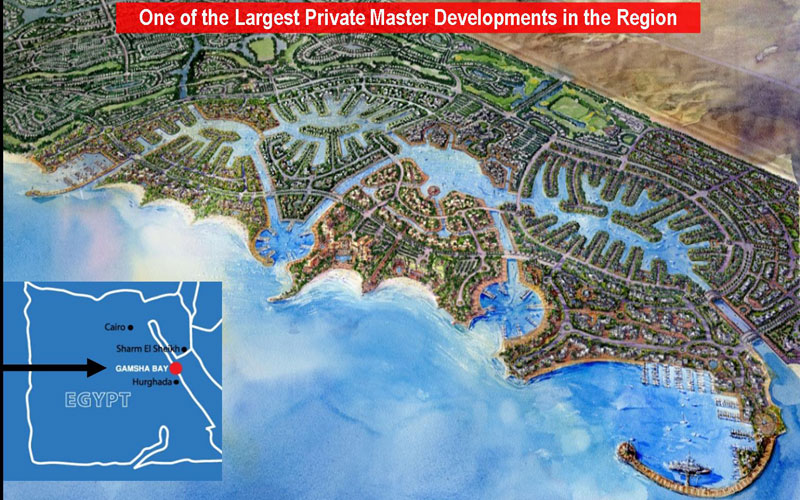
An artist’s impression of Gamasha Bay (Damac): Emirates247.com
Has anything changed or is property development in Egypt business as usual; teeming with corruption and money making deals to benefit the connected few? In Cairo, influential private land developers are intricately connected to government patronage systems. They benefit from discounted land prices and are directly given government land in violation of official land auction laws.
An article in AlMasry AlYoum just two days ago summarizes the Egyptian government’s continued struggle to settle issues on pre-revolution contracts with property developers. A committee to negotiate settlements, with hopes of avoiding arbitration, has been set up and is headed by Prime Minister Essam Sharaf. This special committee has its work cut out for it; it is working to settle 20 foreign and local investor contract issues, including contracts with Al Futtaim and Omar Effendi.
Demands in Tahrir Sqaure echoed the Egyptian people’s desire for justice to be served, for corruption to be cut at the root, and for government officials to be held accountable under the law. However, with occurrences such as the acquittal of Anas al-Fikki, Youssef Boutros-Ghali, Ahmed el-Maghribi and Yaseen Mansour, trust in the process wanes.
The question is, will an attempt to negotiate with investors bring about the change that people want to see? In early May of this year, and in part as a result of the Damac suit, the government discussed a law that could absolve corrupt investors from criminal liability. Even earlier, in April, the Ministry of Agriculture discussed a bill which would legitimize land contracts made under Mubarak’s rule, allowing owners to escape punishment. It seems that the so-called negotiations are simply an attempt for a swift resolution with little attention paid to what was taken from the people of Egypt.
The core of the issue is a matter of priorities, and the government’s priorities should lie with the interest of their citizens. Instead of attempting to encourage investment by pardoning the scandals, the government should strive to better understand the housing needs in Cairo and then encourage private investment in appropriate projects.
There are several factors that have led to investment being distributed unevenly – away from public housing. Between 1952 and 1962, a series of rent control caused the private sector withdrawal from an unprofitable rental housing market. Following the 1967 war there was also a major reduction in public investment in housing and infrastructure. Under Anwar Sadat, Law Number 178 for Egyptian Land Reform – which increased equitable access to land and redistributed 12% of Egyptian land – was abolished and the number of landless people eventually increased. Informal areas continued to expand with the combination of a low supply of affordable housing, an end to land reform, and a decrease in options for low and middle-income Cairenes.
Then, a 1974 state policy of constructing desert cities concentrated public investment in new cities with little left for housing supply in existing cities, and resulted in the unbalanced development in new cities.
The negotiations between the government and property developers exemplify the legitimacy crisis that brought about the revolution, and if the process to settle them is not ultimately fair, then hope in an equally fair process of future contracts and deals seems less likely.
The need for dedicated and sound social research drawing from diverse expertise and with wholly sincere motives is imperative if the cries of the revolution are to be truly upheld. If you have any updates on the issues in the article, additional resources, or projects working towards a better understanding of the housing needs in Cairo, please share with the team via comments or an email to cairofrombelow@gmail.com.
Take Our Survey!Dana Kardoush is part of a team analyzing governance over land in Cairo for Columbia University and the Institute for Research and Debate on Governance.

Cairo's Zabaleen use simple but effective means to keep Cairo waste free (Photo: Khaled Desouki/AFP/Getty Images)
Cairo, home to over 16 million residents, is estimated to produce some 10,000 tones of rubbish each day. Remarkably, some 60% of Cairo’s garbage is collected, mostly by informal garbage collectors known as the Zabaleen. The Zabaleen use the most simple but effective methods to keep Cairo’s street clean.
Zabaleen, an Arabic word meaning Garbage collectors, is a term that has come to refer to a community of Coptic Christians, who live in the Moqattam village near the informal settlement of Manshiyat Nasser, and specialize in waste collection. The group traces its origins to the 1950s the community of Coptic Christians from Upper Egypt who settled in Moqattam and raised pigs, who would eat much of the organic waste they collected.
Earning less than a dollar a day on average, the Zabaleen can usually be seen on donkey carts collecting waste across the city, from Cairo’s poorest informal settlements to its affluent leafy suburbs. After collecting the waste, the Zabaleen bring it back to areas such as Moqattam, where it is separated or sorted. The Zabaleen reuse or recycle approximately an astounding 85% of all the waste that they collect, at a fraction of the cost of the modern waste management systems, which can recycle just 70% of all material.
In 2003, the Egyptian government announced plans to develop a “modern” waste collection system for Cairo, hiring three European waste management companies for the job. However, the plan collapsed after one year of operation, the primary reason being the inability of these companies to compete with the Zabaleen who on average earn less than a dollar a day.
For more on Cairo’s waste management systems please see:
http://www.mdpi.com/2071-1050/2/6/1765/pdf
The Zabaleen have attracted international attention, with numerous documentaries and news reports being made on their craft as well as their dire living conditions. As garbage collectors, the Zabaleen come from the lowest socio-economic tier of Egyptian society. In addition to their poor living conditions, the Zabaleen face major health conditions due to the nature of their work, particularly tetanus and skin diseases. In recent years both local and international NGOs have made efforts to help improve health and living conditions in many Zabaleen communities.
Garbage Dreams – is a film that chronicles the lives of Cairo’s Zabaleen children
However, in response to the 2009 H1N1 influenza commonly referred to as Swine flu, the Egyptian government controversially ordered the culling of all swine populations in Moqattam, directly impacting the livelihoods of some 70,000 Zabaleen. The incident sparked major tensions between the government and the Zabaleen. In the aftermath of the culling, many news reports indicated a significant increase in garbage waste in the city, as the Zabaleen raised pigs to eat the organic waste they collect.
Although much has been written about the Zabaleen and the vitally important services they provide, the Egyptian government has not incorporated these groups and their expertise into developing a sustainable solution to Cairo’s rapidly expanding waste collection needs. The story of the Zabaleen highlights the ingenuity of informal services and the need for government authorities to see such communities as allies in building an effective waste management system to better serve all the citizens of Cairo.
To learn more about Cairo’s Zabaleen Community please see:
http://zabaleen.wordpress.com/
http://www.synergos.org/bios/ezzatnaem.htm
http://www.bbc.co.uk/dna/h2g2/A23780270
http://www.npr.org/templates/story/story.php?storyId=89956754
القاهرة, التي يصل عدد سكانها إلى أكثر من 16 مليون شخص, تخرج حوالي 10,000 طن من الزبالة كل يوم. فمن اللافت للنظر أنّ 60% تقريباً من زبالة القاهرة تنجمع في الغالب عبر طرق غير رسمية و على يد الزبالين الذين يستعملون طرقا بسيطة و فعالة للحفاظ على نظافة شوارع القاهرة.
“الزبالين” كلمة عربية تعني جامعو الزبالة و قد أصبح يصف الإسم مجتمع مسيحيين قبطيين, ساكنون في قرية االمقطم بقرب المنطقة العشوائية منشية ناصر, و يتخصصون بجمع النفاية. المجموعة تجد أصولها في مجتمع مسيحيين قبطيين الذين عاشوا بصعيد مصر خلال الخمسينات, و اسثقروا في المقطم و ربّوا الخنازير التي كانت تأكل النفاية العضوية.
على ربح أقل من دولار واحد في النهار, يُشاهد “الزبالين” عادةً راكبين عربة يجرها الحمار و يجمعون النفاية في كل أنحاء المدينة, من أفقر عشوائيات القاهرة إلى ضواحيها الموسرة المزدهرة. بعد جمع النفاية, يقوم “الزبالين” بارجاعها إلى مناطق, مثل المقطم, حيث تُفرق أو تُنظم. يستعمل “الزبالين” تقريبا 85% من النفايات التي جمعوها و هذا يفعله على كلفة أقل بكثير مما تكلف الأنظمة الحديثة لمعالجة النفايات و التي بإمكانها أن تعود تدوير فقط 70% من النفايات.
في عام 2003, أعلنت الحكومة المصرية خططا لتطوير نظام “حديث” لجمع النفايات في القاهرة, باستخدام ثلاث شركات أوروبية لإدارة النفايات. ومع ذلك, سقط المشروع بعد عام واحد, و السبب الرئيسي هو عدم قدرة تلك الشركات على منافسة الزبالين الذين يكسبون أقل من دولار واحد يوميا.
لمعرفة المزيد عن أنظمة إدارة النفايات في القاهرة الرجاء راجع:
http://www.mdpi.com/2071-1050/2/6/1765/pdf
قد جذب “الزبالين” انتباه دولي, بكثير من الاستندات و تقارير صحفية كثيرة عن عملهم و ظروف معيشتهم المزرية. بما أنهم جامعو القمامة, فإنهم من أدنى الطباقات الإجتماعية الإقتصادية في مجتمع مصر. بالإضافة إلى أوضاعهم المعيشية السيئة, يواجه “الزبالين” ظروفا صحية كبرى نظرا لطبيعة عملهم, خاصةً الكزاز والأمراض الجلدية. في السنوات الأخيرة جعلت كل من المنظمات غير الحكومية المحلية والدولية أن تنبذل جهداً للمساعدة على تحسين الظروف الصحية والمعيشية في كثير من مجتمعات الزبالين.
أحلام الزبالين – هو الفيلم الذي يروي حياة أطفال الزبالين في القاهرة
ومع ذلك ، استجابا للإنفلونزا في عام 2009 التي يشار اليها عادة باسم انفلونزا الخنازير, أمرت الحكومة المصرية, بشكل مثير للجدل, اعدام جميع الخنازير في المقطم. فأثر هذا القانون تأثيرا مباشرا على سبل العيش لحوالي 70,000 زبال. أثار الحادث توترات كبيرة بين الحكومة والزبالين. في أعقاب عملية الاعدام، أشارت تقارير صحفية عديدة إلى زيادة كبيرة في النفايات في المدينة, لأن الزبالين ربوا الخنازير ليأكلوا النفاية العضوية التي يجمعونها.
على الرغم من أن الكثير قد كُتب عن الزبالين والخدمات ذات الأهمية الحيوية التي يقدمونها, لم تدرج الحكومة المصرية هذه الجماعات وخبراتها في تطوير حل مستديم لاحتياجات جمع النفايات المتزايدة في القاهرة. قصة الزبالين تسلط الضوء على براعة الخدمات غير الرسمية و الحاجة إلى السلطات الحكومية أن تحسب هذه المجتمعات كشركاء ببناء نظام فعال لإدارة النفايات لتقديم خدمة أفضل لجميع مواطني القاهرة.
لمعرفة المزيد عن جماعة الزبالين في القاهرة الرجاء راجع:
http://zabaleen.wordpress.com/
http://www.synergos.org/bios/ezzatnaem.htm
http://www.bbc.co.uk/dna/h2g2/A23780270
http://www.npr.org/templates/story/story.php?storyId=89956754
Rehan Rafay Jamil is part of team analyzing governance over land in Cairo for Columbia University and the Institute for Research and Debate on Governance
ريحان رفي جميل هو عضو من فريق عمل يقوم بتحليل إدارة وحكم الأراضي في القاهرة منتدب من قبل جامعة كولمبيا ومعهد الابحاث والنقاش حول مباديء الحكم.
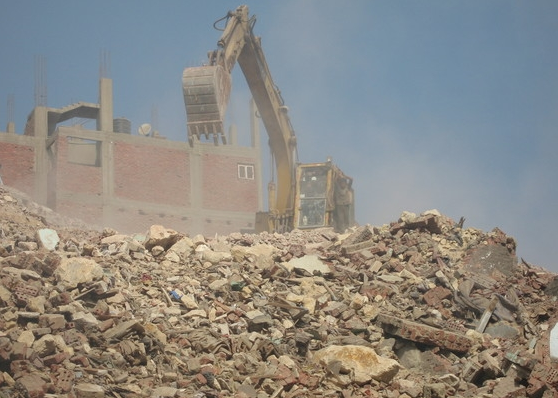
Cairo Forced Evictions and Demolitions (Copyright Amnesty International)
Amnesty International recently released a report ‘We are not dirt’: Forced evictions in Egypt’s informal settlements, chronicling the many cases of forced eviction in the country’s slums. The report criticizes the government’s tactic of deeming certain areas of Cairo “unsafe” and insisting residents be removed for their own safety; residents were often left homeless and were not properly notified before eviction. “According to official sources, an estimated 850,000 people live in areas deemed “unsafe” by the authorities, while some 18,300 housing units in Egypt are at risk of imminent collapse.”1 The organization concludes its two-year research endeavor with a call for a new urban plan to replace the massive development scheme-Cairo 2050.
The release of this report, along with many others on the state of Egypt’s urban impoverished, raise questions about 1) where urban issues, especially those centered in Cairo, will fit on the post-revolution national agenda, and 2) who will introduce a new vision for Egypt’s cities. Faced with urgent national priorities including running elections, drafting a new constitution, reinforcing the economy, and supporting rule of law and stability, the country’s new leaders may not be willing to dedicate the time, money, and energy needed to initiate participatory urban design reflecting the needs of Cairo’s impoverished. Furthermore, the metropolitan leaders and urban planners that supported/executed the old regime’s conception of Cairo, are still managing the city’s design. Reports indicate that Cairo 2050 has been followed by Egypt 2052: a simple repackaging of the prior vision. If luxury projects and tourist-driven city planning are the norm bequeathed to young planners, where and how and with whom will the city find its voice? How can the spirit of the revolution be translated into real and practical urban design?
أصدرت منظمة العفو الدولية تقريرا بعنوان “نحن لسنا بتراب : عمليات الإخلاء الإجبارية في عشوائيات مصر” ، والذي يسرد عدد من حالات الطرد الإجباري في أحياء مصر الفقيرة. ينتقد التقرير استراتيجيات الحكومة مثل وصف بعض المناطق في القاهرة بأنها “غير آمنة” للعيش فيها بإدعاء الحفظ على سلامتهم خالقة بذلك حججا لإزالة السكان ، مما يترك السكان بلا مأوى حيث لا يتم ابلاغهم قبل الإخلاء والطرد الإجباري. “ووفقا لمصادر رسمية ، يقدر عدد من يعيش في مناطق تتصف بأنها غير آمنة حوالي 850000 شخص ، في حين أن يبلغ عدد الوحدات السكنية المعرضة للخطر أو على وشك الانهيار حوالي: 18300وحدة سكنية”. (1) تختتم المنظمة بحثها الذي دام عامين بدعوة إلى خطة عمرانية تحل محل خطة القاهرة ٢٠٥٠ التنموية الضخمة.
يثير تقرير مثل هذا عدة تساؤلات حول 1) الأهمية التي سوف تحرز عليها مناطق مصر الفقيرة –وخصوصا تلك المتمركزة بالقاهرة–،على الأجندة الوطنية في مرحلة ما بعد الثورة 2) وحول ما إذا سيكون هناك من يطرح رؤية جديدة لمدن مصر، حيث يواجه القادة الجدد تحديات وطنية ملحة مثل الانتخابات وصياغة دستورٍ جديد وتعزيز الاقتصاد ودعم سيادة القانون والاستقرار مما قد يسلبهم من الإرادة والإستعداد لتكريس الوقت والمال والطاقة لتدشين مبادرات تصميم عمراني تشاركية تعكس احتياجات فقراء القاهرة. وعلاوة على ذلك ، فإن قادة ومخططي العمران ممن دعموا أو نفذوا مفهوم حكومة مبارك للقاهرة ، ما زالوا هم من يديرون تخطيط المدينة العمراني. تشير التقارير إلى أنه تم استبدال تخطيط القاهرة 2050 بتخطيط مصر 2052 مما يتمتع بالرؤية نفسها متقمصاً إسم وحلة جديدة. وإذا كان المعيار للمخططين المعماريين الشباب يتمثل في تلك المشاريع التي تنم عن الرفاهية وخطط عمرانية تهدف إلى زيادة دخل السياحة أين وكيف ومع من سوف تجد المدينة صوتها؟ كيف يمكن أن تترجم روح الثورة إلى تصميم عمراني حقيقي وعملي؟
Read more about Cairo’s informal settlements and forced evictions:
http://www.almasryalyoum.com/en/node/489371
Meredith Hutchison is part of team analyzing governance over land in Cairo for Columbia University and the Institute for Research and Debate on Governance


 Cairo from Below القاهرة من الأساس